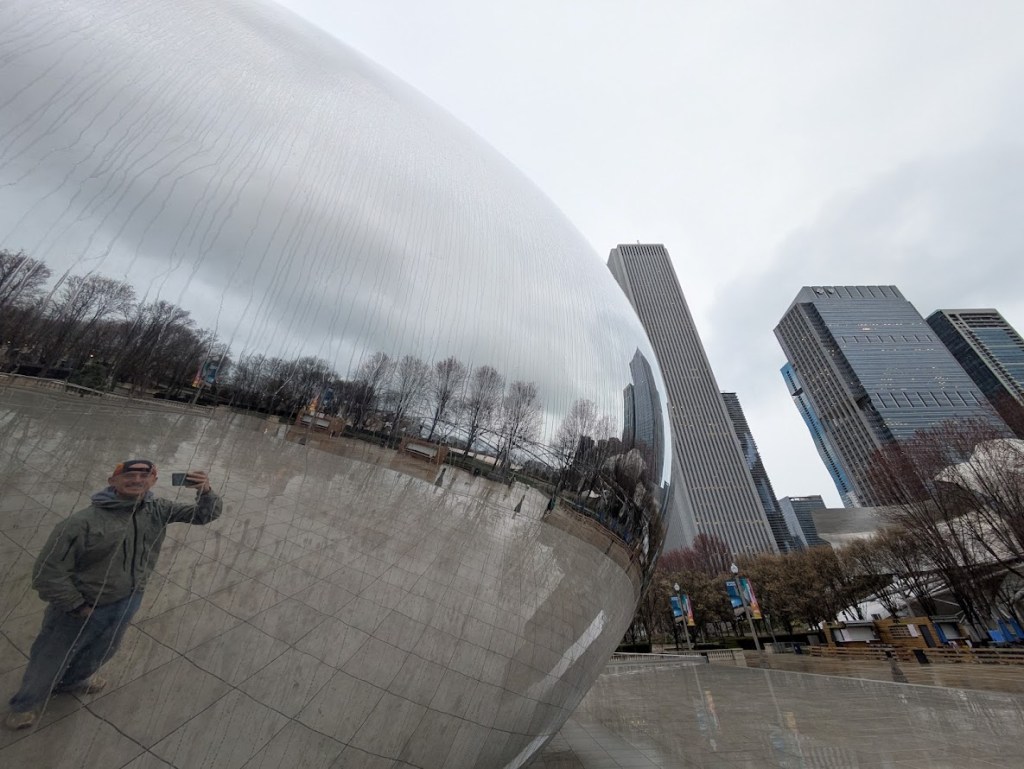
Ever since Chance the Rapper “put the indie in Windy City”, I have long loved Chicago.
Before ever seeing its skyline, Chicago had claimed me through sound and story. Deep-dish pizza, the “L” train, The Bean, its distinctive neighbourhoods, and its weather extremes. I had never visited, but much of my favourite music heralded from Lake Michigan’s blustery shores, and I thus felt I knew it oh so well.
Coincidence? Or, perhaps, an affinity, a felt belonging, a subconscious identification with a city and its fruits?
Through melody and verse, I’d absorbed Chicago’s essence. I knew of its quiet ambition; its settled grit; its swaggering fortitude. I knew the dramatic defiance with which it propels concrete mountains upward in the face of the Midwest’s bleak flatness.
The city’s character is distilled into the crescendos and swells of Sufjan Stevens’ “Chicago”. It can be found too in the giddy excitement of arriving, whether driving in on “Lake Shore Drive” (like Alliota Haynes Jeremiah), or flying into O’Hare International on a private jet (as Kanye West presumably did on “Homecoming”).
Much of Kanye’s discography instilled in me a love for this city. So many bars, on so many of his greatest tracks, where he lays down his own love for Chi-town.
“You see how I played a big role in Chicago like Queen Latifah?” (Everything I Am); “fantasizing ‘bout this back in Chicago/Mercy, mercy me, that Murcielago” (Monster); “I walk through the valley of the Chi where death is” (Jesus Walks); “I’m just a Chi-town brother with a Nas flow” (Dark Fantasy); “Chicago to St Louis, St Louis to Chicago” (30 Hours); his ever-present producer tag proclaiming, “This Chicago brother!”
Not just Kanye though – so many of my favourite and most formative rappers. NoName, Common, Lupe Fiasco, Chief Keef, and Saba too. Each voice had become a thread in the tapestry of my imagined Chicago, weaving stories of struggle and triumph, of corners and skylines, of home and belonging.
When visiting, I arrived not with expectation, but with a sense of returning. Can we know a place without ever having been there? Can we understand a place without ever having tasted its streets?
I’m not sure. But Chicago was like everywhere I’d ever loved, and nowhere I’d ever known.
…
Chicago. Or, Chicagou – as called by the native Potawatomi tribe, apparently meaning “wild onion” or “skunk”. Or The Second City (a slight about the city’s alleged inferiority to New York), or Chi-Town (a favourite of many rappers) or, of course, The Windy City.
Known by many names, each tells of a distinctly American story.
A Native American area, first stumbled across by European explorers in the 17th century. Owing to its strategic location at the Chicago River’s mouth, it soon blossomed into a crucial transportation and trade hub. Rapid population expansion followed, ballooning from 30,000 in 1850 to over 1 million in the space of forty years). Its mettle was founded in the crucible of adverse weather, but also in in the devastating Great Fire of 1871, after which almost the entire city was needed to be rebuilt.
The city was again devastated – this time financially – by the Great Depression, then was ruled by Al Capone throughout Prohibition. World War II enabled extraordinary economic recovery, and the 1980’s and 1990’s saw its establishment as a global financial and cultural centre.
Walking these streets, you feel the pulse and weight of each of these many developments and chapters.
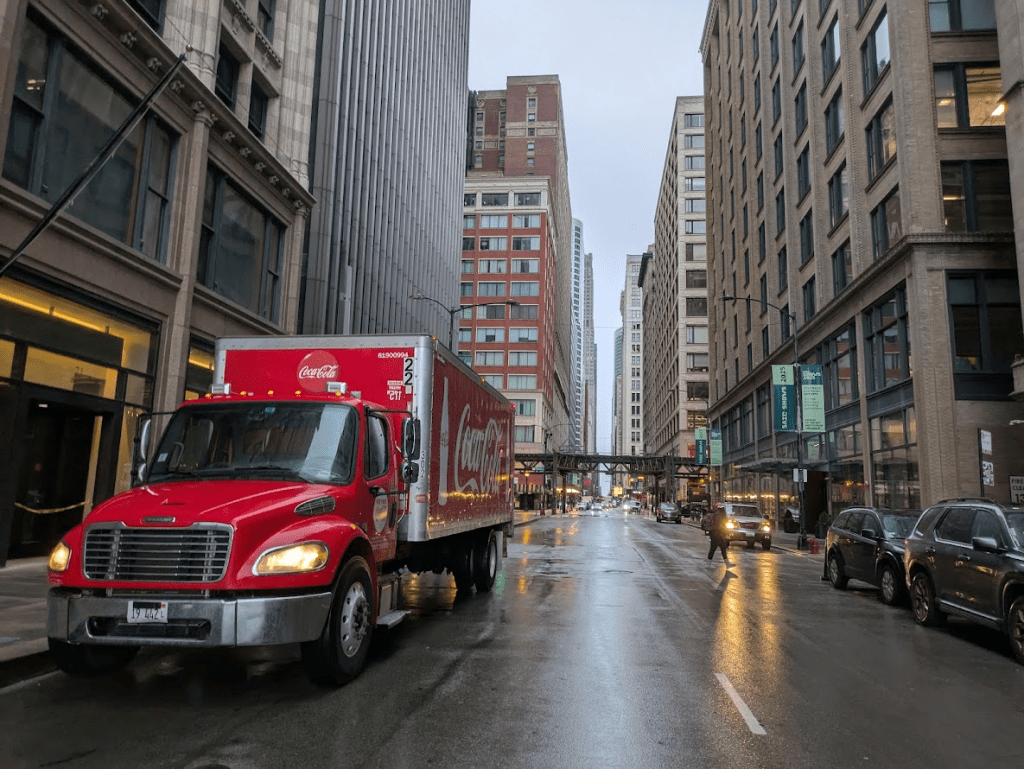
In Manhattan, I feel a whitewashing of history. Unlike the closing frames of Scorsese’s Gangs of New York, one’s viewing of the tapestry of time is obscured by modernity and money. New York is so relentlessly developed, that one senses only the fairy tale.
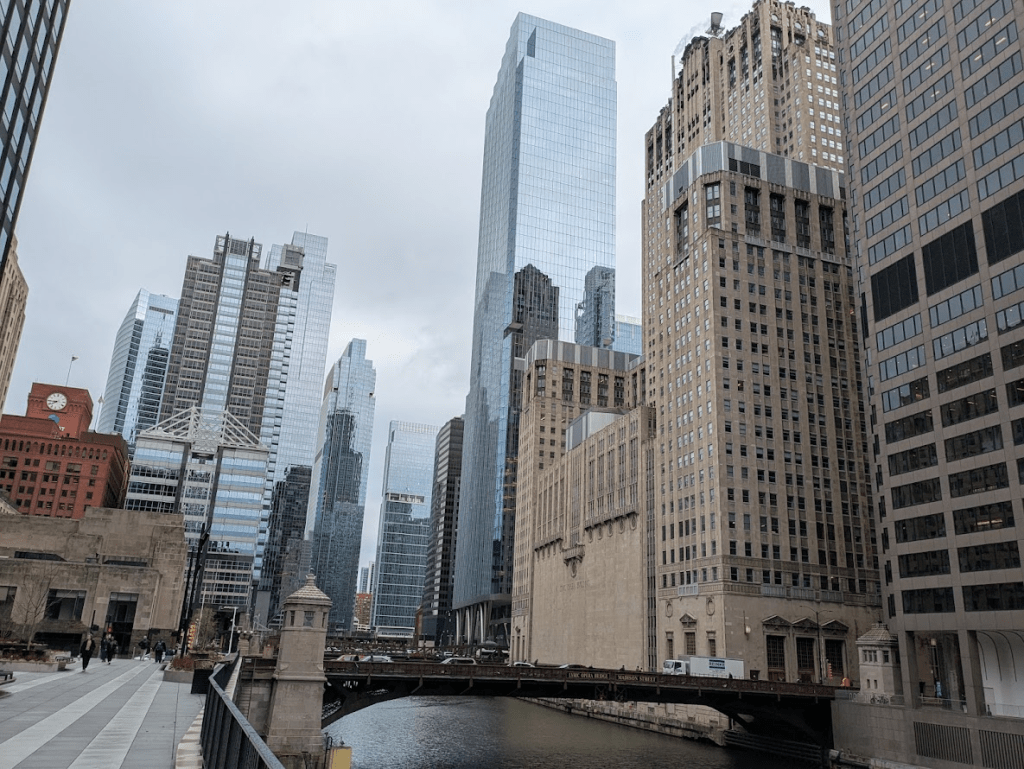
Not so with Chicago. The Chicago River and its many tributaries wind through the city’s centre, in a marauding, exploratory manner, carving up the landscape of skyscrapers.
You can see it when walking around: the city’s forebears wrangling with the rivers and the lake and the wind and the rain. Unlike Amsterdam, where canals follow ancient planned routes, the waterways in The Second City go where they please. Unlike New York, the buildings rise where the water permits.
Indeed, I have enjoyed few skylines more. It is truly magnificent. A sea of glass and steel, they reflect each other and the water in perfect harmony. The Willis Tower is a whopper, and the Chicago Trump Tower is, in all honesty, rather beautiful.
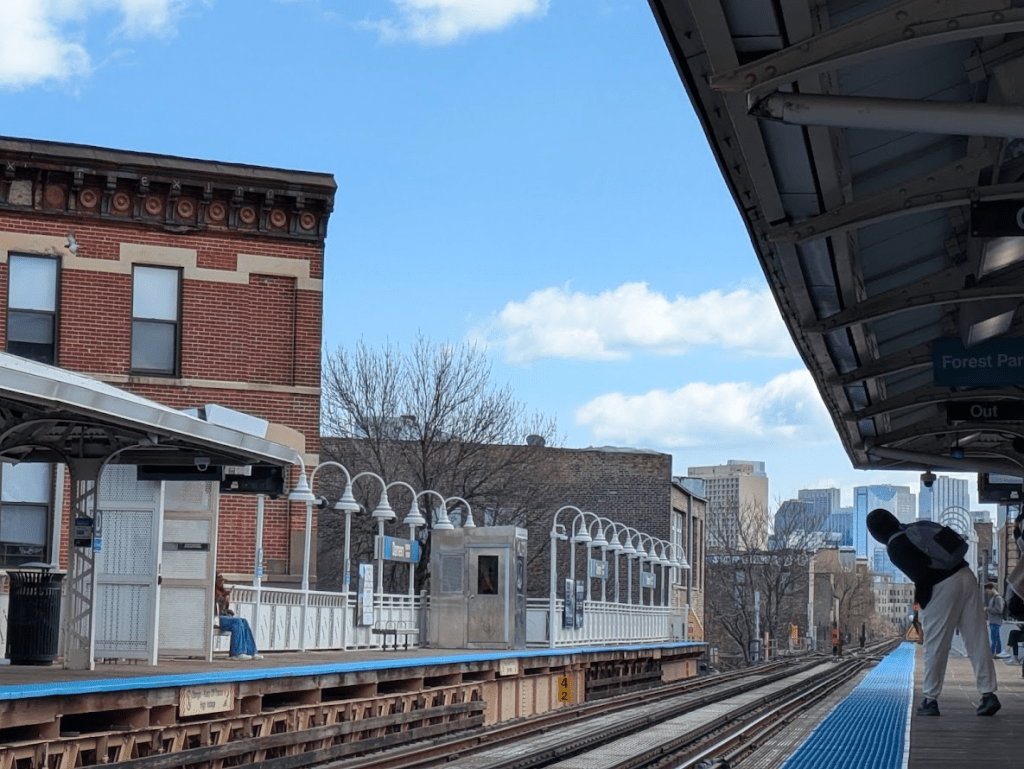
The parks are clean. The “L-train” (an elevated rail system that runs atop the roads) is as pleasant as it is practical. The museums are enormous and renowned. And the food is fantastic.
Arriving late at night, the following wet and windy morning was spent trotting happily.
I clambered around The Bean, charmed some charming security guards, obliterated a burrito, gawped at skyscrapers, and slammed Dunkin’ Donuts’ filter coffee.
I had no book with me, so naturally I walked three miles out of the centre to find a Barnes & Noble, to an area called Wicker Park.
Observations as I walked through the suburbs:
- American roadworkers work exceptionally hard and exceptionally fast. Between leaving and coming back, they’d surfaced a huge portion of the road;
- For America, Chicago’s pavements are actually pretty good;
- The suburbs I walked through felt intensely middle-class;
- Loads of buses passed regularly;
- Public bikes for rental, and electric bikes for hire are common;
- The city is constructed on a very rigid grid system;
- People weren’t all that friendly – not many of my smiles were returned.
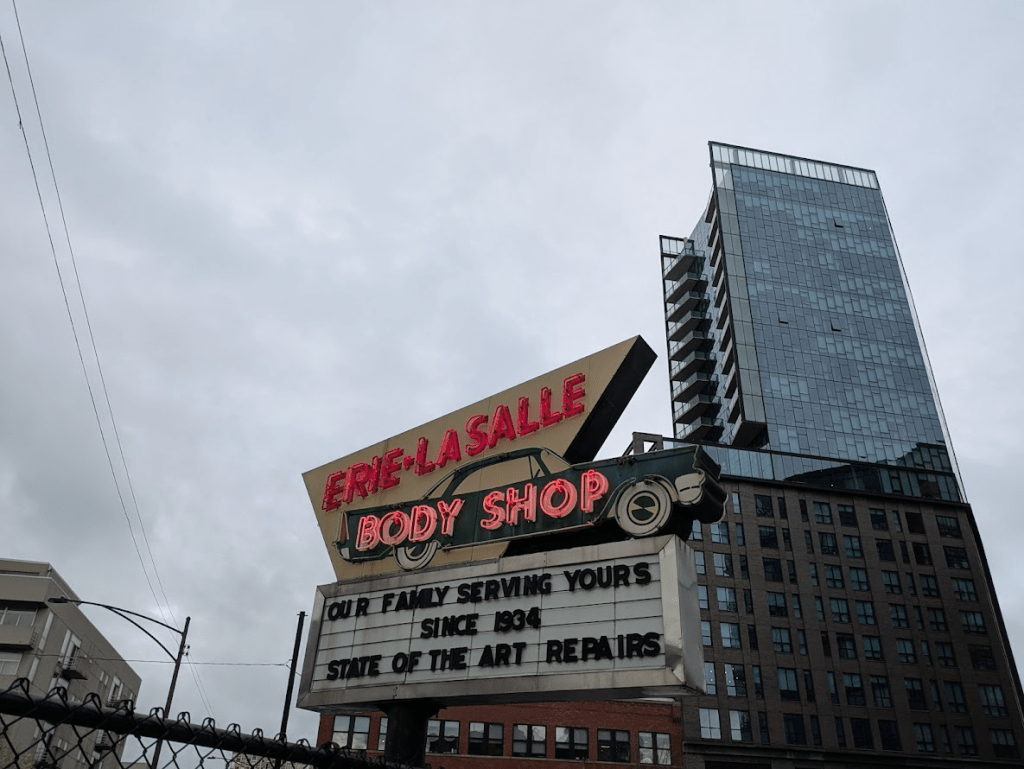
Wicker Park rewarded the trek magnificently. What a gem of a neighbourhood I had found. Located in the Near Northwest Side area, it felt trendy, affluent, artistic, and gentrified.
Many very cool boutique vintage shops line Milwaukee Avenue. One I ventured into was bedecked with antique silver jewellery, which gleamed and beckoned from the also vintage glass cabinets that housed them. There was no real lighting inside, and the elderly gentleman behind the counter – tending to the workings of a broken watch – didn’t even look up as I came in.
Out from the stairs at the back swung a cool young guy. I could compare him to Mouth from The Goonies and, in a strange way, to Barry Keoghan’s Dominic in The Banshees of Inisherin. He swaggered and sauntered, and referred to the shop owner as The Old Man.
Mouth was 22, Argentinian, and had arrived in the US a couple of years prior. The Old Man, Mouth told me, had arrived 30 years before, and had always traded in antique silver jewellery. Mouth had recently started up the vintage clothing thing, and they had a good thing going.
I loved them both, and their distinctly American sport. And I left with more new-old clothes than my carry on carry-on case could carry on home.
After, I slurped down some ridiculously over-stylised espresso in a little place called ORO Coffee, that was hosting a Women in Business coffee morning.
Americans establishing business relations with each other is always amusing, and this was no exception. Strange, stilted, cringe-inducing and so obviously performative, like two gawky geese performing some kind of essential mating ritual. But they all seem to love it, and it clearly works a treat, so what do I know.
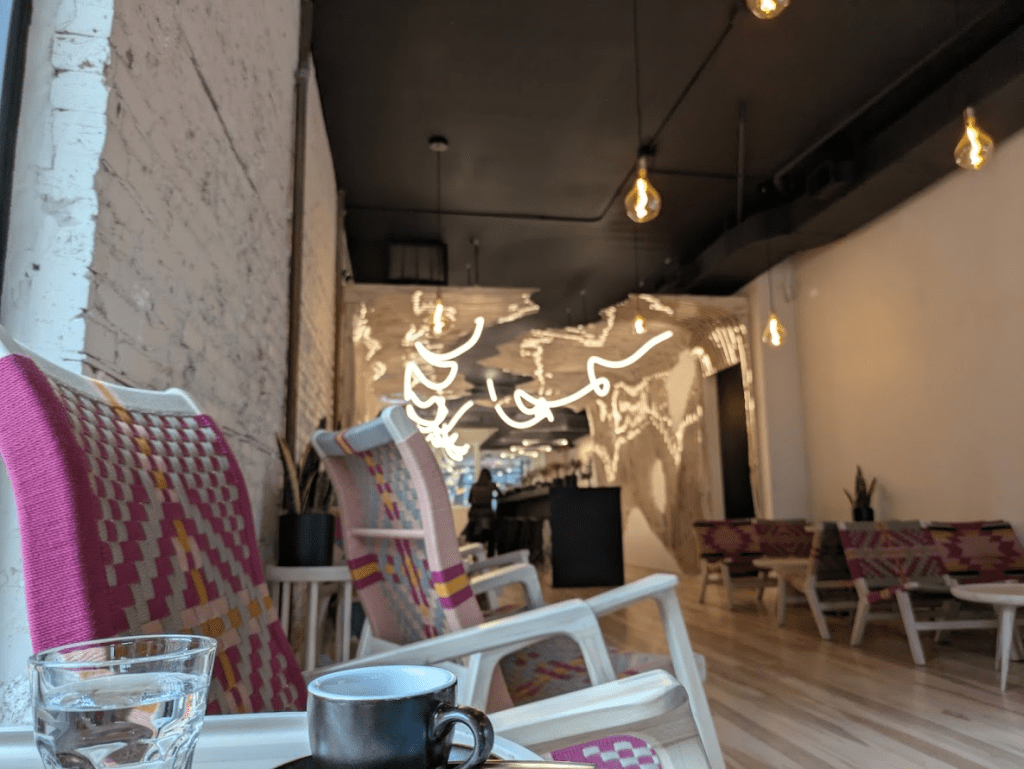
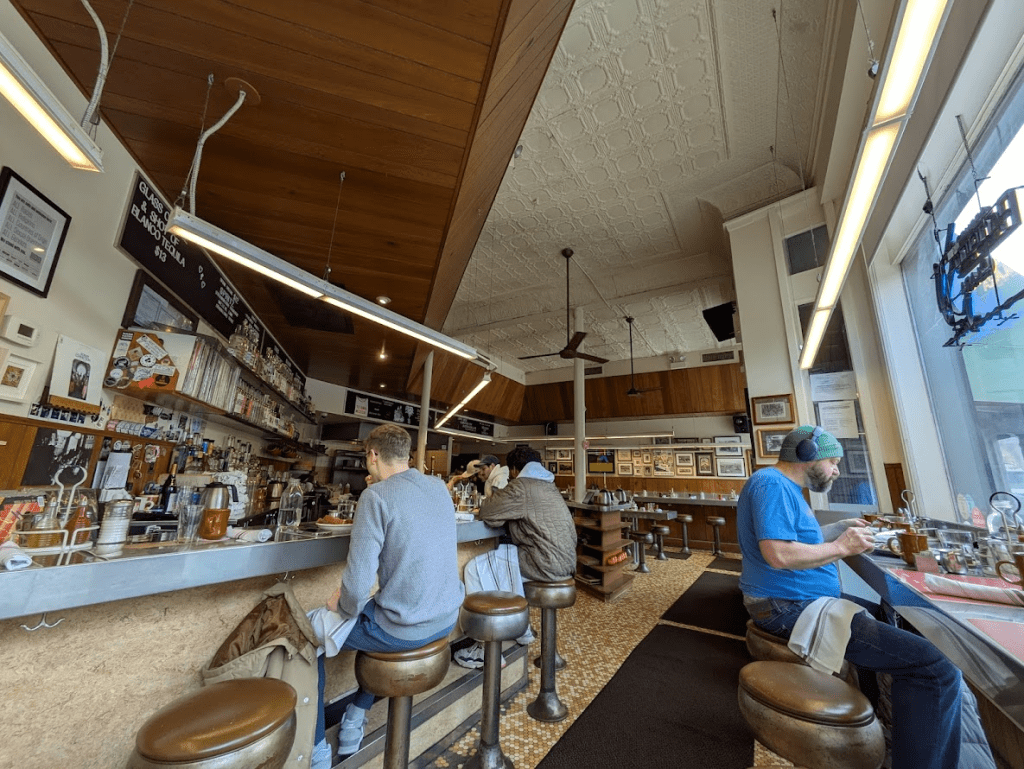
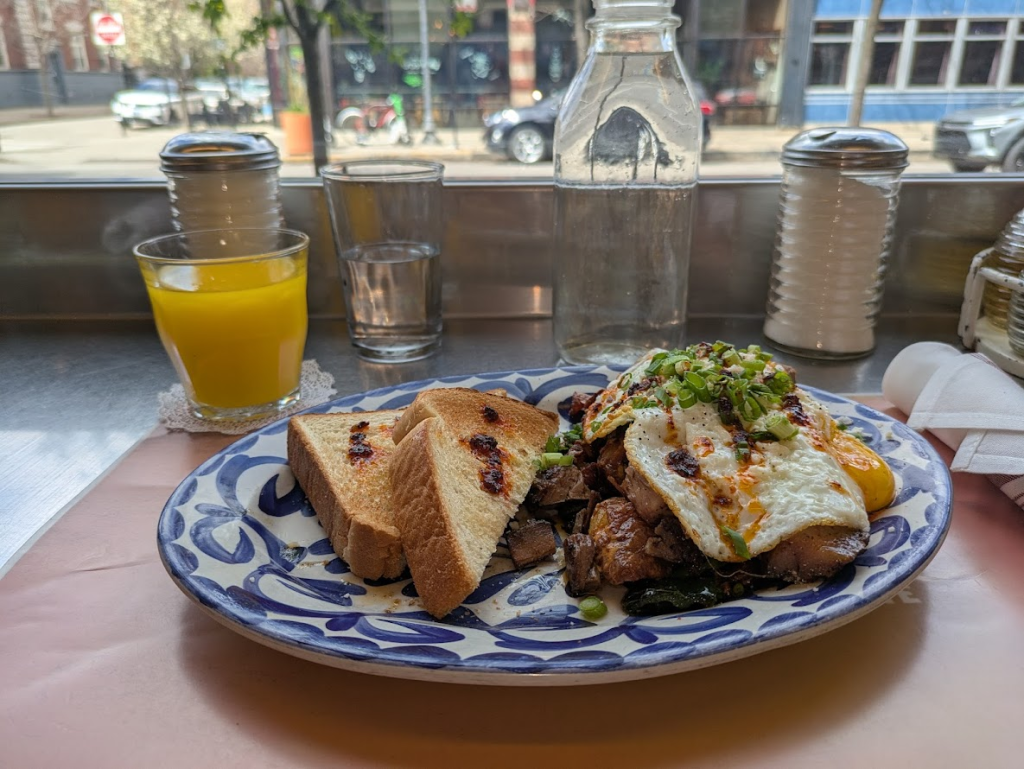
I lunched at a spot called Dove’s Luncheonette, and oh my it was sublime. Glazed clay coffee mugs. Retro-futuristic stools beneath a street-facing breakfast bar. Vinyl records sounded through the system. Fresh orange juice, served on lace drip-matts. Excellent service, and Southern-inspired Mexican dishes.
I went for an OJ and the brisket hash – crispy potatoes, brisket burnt ends, local mushrooms, chipotle aioli, queso fresco, scallion, peppers, two eggs, Texas toast – which danced across my palate as the Pulp Fiction soundtrack played throughout the room.
The Avalanches said it best: “Get a drink, have a good time out; Welcome to Paradise.”
I rode the L-train back to the city, took a nap, and reported for duty for the flight back home.
All told, there are few days I have spent better, and few cities I have loved more.
Chicago had delivered on every promise whispered, through years of songs and stories. It was exactly as magnificent as I’d known it would be, and yet entirely different too.
More prouder, more impressive, more expressive, and far more peaceful than I’d imagined.


 The Eye of an Archer
Leave a comment