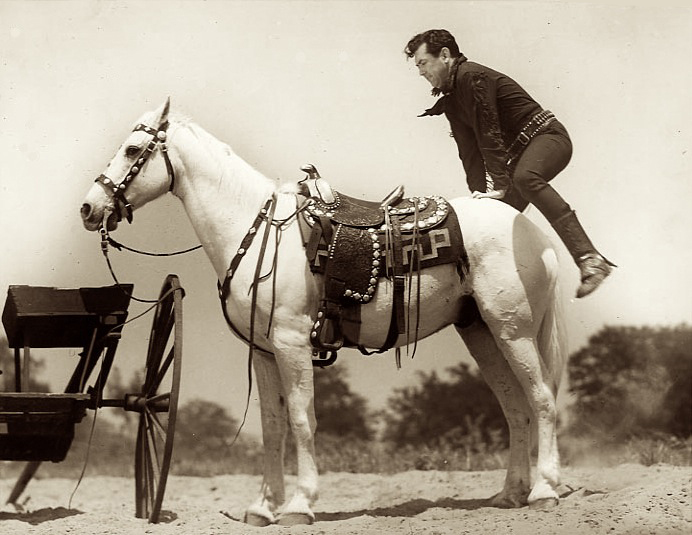
The English language is rich with idioms related to the process of starting over. Picking up the pieces. Getting back on the wagon. Getting back in the saddle. Turning over a new leaf. Getting back into the groove.
The process of acknowledging a loss of momentum that we surrendered, and then just hoisting ourselves back up and trotting on again towards the sunset of promise and betterment. Why is this vein of idiom so lexically rich? Because it is such a fundamental part of the human experience.
At its core, starting over represents our inherent capacity for renewal—our ability to acknowledge failure, and making the choice to begin again. Here, today, I’d like to explore how various traditions understand this cycle of commitment, failure, and renewal, maintaining a particular focus on the wisdom found in recovery communities.
…
Addiction’s prevalence is, within our modern society, one of the areas we misunderstand and remain ignorant of most. Indeed, to alcohol – so normalised, so encouraged and widely consumed, that many millions of people live completely unaware of how addicted they are. But, too, in our misunderstanding of how addicted we are all to so many things.
Addiction, defined as a chronic relapsing condition characterised by engaging in the compulsive use of harmful behaviour despite attendant consequences, casts a net far wider. Understood as such, I know no one who can count themselves free of such binds.
Addiction to our phones, the news, social media; to nicotine, gambling, caffeine; to toxic relationships, to selfishness, to lethargy and gluttony. And addiction – incessantly, completely and unwaveringly – to thinking.
The Bible embodies such behaviour in the metaphor of the Devil, a silver-tongued figure of temptation and destruction enticing us to stray from our path of morality. Flowering from the mouth of Kevin Spacey’s Verbal Klint in The Usual Suspects, but rooted in the writing of the French poet Baudelaire, emerges a line pregnant with wisdom:
“The greatest trick the Devil ever pulled was convincing the world he didn’t exist”.
The first step of the AA programme for conquering addiction and the woes attendant with it, is an admitting of our “powerless over alcohol” and a recognition “that our lives had become unmanageable.”
For many, such an admission is born from hitting rock bottom. Of falling so far that you feel you can fall no further, of feeling so exhausted by the lies and bored by the repetitions, that you finally acknowledge the nature of your experience.
For some, it arrives in the form of religious experience. Shown a new path by the discovery of faith, that opens one up to accepting our inability to go it alone. A path that gives the strength to admit powerlessness, and surrender to something greater than ourselves.
For others – indeed, for AA founder Bill, who experimented with LSD in the 1950s under medical supervision – psychedelics may also open the door to admission of powerlessness. While AA’s approach is rooted in total absence, psychedelic compounds may provide a catalyst for spiritual insight, especially for those with a resistance to the notion of a Higher Power.
This pattern of surrender and recognition appears across spiritual traditions, and reflects my own experiences with commitment and relapse.
…
Alcoholics Anonymous, to my mind, is one of the greatest organisations ever conceived. Bill and Bob, a New York stockbroker and a surgeon from Ohio, met in 1935, and discovered through sharing their struggles with alcoholism that mutual support and spiritual surrender could sustain sobriety.
Originally growing from the teachings of a Christian evangelical movement, AA later distanced itself from overt religiosity, instead codifying in The Big Book – the mainspring of AA belief – a spiritual path, that interwove ideas and philosophies from extant traditions of religious, philosophical and meditative spirituality. It is a phenomenal piece of writing, and one of the greatest interweavings of self-taming and self-surrendering spiritual wisdom.
Why do we waver from the path to which we have committed ourselves? Alcoholism is the most dire of conditions to be beset by. It is a road that, if followed, leads invariably to a life of deception, destruction, debasement, and manifest misery. So why, as according to the National Institute of Alcohol Abuse and Alcoholism, do 70% of individuals struggling with alcoholism relapse at some point?
It is simply our nature, argue many Christians. Through the disobedience of Adam and Eve, relapse, renege and ruin are hard-wired into our DNA. There exists a deep brokenness within, that can be cleansed, covered, or healed by championing Jesus and his teachings.
Or, is it simply a weakness of will, termed by the Ancient Greeks as akrasia. We know where right lies, but passion, desire and ignorance overwhelm our capacity for virtue and reason, so argued Plato and Aristotle.
Judaism instead points to an ever-waged internal conflict of inclination between good (yetzer hatov) and evil (yetzer hara). Endemic to humanity is this persistence in falling short, but the return to right action can recursively be found through mitzvot (good deeds), repentance (teshuva), and community.
Within these three traditions, each belief is built on the foundational cornerstone of an immutable Self. An essence, a being, which is more than simply a bouquet of all experiences and values and emotions and senses. In diagnosing the problems and prescribing the solutions, each of their contained wisdoms are grounded in the Self improving itSelf.
In many Eastern religious traditions, however, this is evidently paradoxical.
For many Buddhists, we continually percolate in the ocean of Samsara – an endless cycle of craving, clinging and confusion – due to the poisons of ignorance, attachment, and aversion. Only in surrendering these ills (especially our attachment to self, and the ignorance of our truly empty nature) can we transcend suffering and reach Nirvana.
Expressed differently by many Hindu sects, the ensnaring burdens of maya (illusion) and karma (our past actions) compel us to act out of ego and illusion. We thus forget our true atman nature and disconnect ourselves from Brahman, the ultimate reality.
Modern secular psychology can be understood too along these lines, arguing that a confusing cocktail of conditioning, trauma, unconscious drives and cognitive distortions deviates us from the path that we set ourselves on. Our wiring to survive rather than to flourish and thrive at the peak of Maslow’s Hierarchy, directs us down paths of patterned behaviour.
How to make sense of these seemingly dual perspectives? To my mind, they both provide a useful means in the battle. We must seek to transcend the self, and weaken the grip it holds upon us. It is indeed illusory, as well as selfish and misguiding. But we must also understand how to work alongside it.
Like the Fremen of Dune, we are far better served cajoling the writhing and gargantuan sandworm, than seeking to fight it head on. If our sole goal in life were to lose weight, then the Self could be likened to an incurable tapeworm. Slippery, parasitic, non-native, and undesirable. But, if understood and factored into considerations, a useful albeit unlikeable tool.
The Self can motivate and compel to action, but it is also unreliable – in both its direction, and its utility.
…
AA’s twelve-step programme beautifully marries these seemingly contrasting ideas. As one teeters along the ledge of fledgling sobriety, there are two hands of support to carry us along: the Eastern wisdom of surrendering ego, and the Western framework of structured self-improvement.
In this delicate balance, the fog is lifted and a path forward is found: neither fighting the self directly nor blindly following its whims, but instead redirecting its energy toward connection, service, and a purpose greater than itself. Like the sandworm-riding Fremen, enabled by internalising generational wisdom, we transform what threatens to destroy us into the very vehicle of our liberation.
An ever-well-intentioned and sensitive man, Ben Haggerty – known more widely as Macklemore – documented his experiences with alcoholism, addiction and sobriety, in much of his earlier music. On one track, titled “Starting Over”, he describes the experience of relapse.
A meticulously constructed House of Cards, built one day at a time, that came tumbling down with the gust of two Styrofoam cups. A devastating loss of both the trust he had rebuilt and the peace-bringing sanity he had so carefully cultivated.
But, too, it is a sacrament of the magnificent wisdom encapsulated in the structured philosophy of AA. A path back to sobriety, freed from judgement, centred on a willingness to be honest and open. No one is beyond recovery, no matter how many times you restart. This is not a pressure to fix your non-immutable self into a box of eternal sobriety – it is to be sober simply just for today, and to continually make anew this promise.
Macklemore writes and repeats the line, “If I can be an example of getting sober then I can be an example of starting over.” In seeing the strength of others, we become strengthened and emboldened to start over. In seeing people waging diligent battle with their addictions, and emerging triumphant everyday, I too have found courage.
Sobriety is not merely surrendering negative habits, nor is it simply the act of giving up a substance or behaviour. It is a commitment to being better, and a promise to continually start over.
…
Last month I made a commitment to run, workout, and practice yoga every day. Intermittently, I have done so – but not with the regularity I’d imagined. I just haven’t really done it. To use the language of addiction, I relapsed entirely and reneged on the promise I had made.
The month before, I made a commitment to writing daily, a pledge I have since faltered on and have failed to return to. Despite starting from a place of discipline in the pursuit of self-development and pleasure, the motivation morphed into an ego-driven exercise in self-reification.
My life is better, I am aware, when I exercise regularly and write every day, yet I have not been able to pick these practices back up again. For weeks I have wanted to return to these practices, and yet have failed to do so. When we fall off the wagon, it is so difficult to get ourselves back upon it. When the leaf of the book becomes sullied and soiled, mustering the energy to turn it over and start afresh requires a courage that can be hard to summon.
Whether alcoholics or otherwise, I think we all can find profound wisdom in the teachings of Alcoholics Anonymous. Many, if not all, of us, would benefit deeply from the self-exploration, the support of community, and the strength which we can derive from the strength of others.
Where once motivating, it is here that the Self works against us. Rather than being a voice of positive encouragement, so often the self-talk conjured by the Self is negative and undermining. Rather than picking us up again, so often it spins narratives that legitimise the behaviour. In my case, I’ve often been jetlagged, exhausted, and busy with socialising, and my mind seizes upon this as justifiable rationalisations.
It is at these times, that the wisdom of Alcoholics Anonymous is so useful. Surrender oneself to your Higher Power – be that your God, your commitment to being a better person, or to the relationships that both support and define you. Start afresh today, acknowledging the shortcomings of your yester-self, but acknowledging too that today is a new opportunity.
The religious and philosophical explanations for why it is we need to start anew, may differ, but all agree on one central truth: the default of the human experience is to exercise damaging behaviours that distance ourselves from our true nature or fully realised selves.
In embracing the journey of starting over—again and again—we find ourselves in good company. The wisdom traditions of the world have all acknowledged this fundamental human pattern not as a failure but as the very terrain of growth itself. Whether through the structured steps of AA, the mindfulness practices of Buddhism, or the grace-centred approach of Christianity, the message remains consistent: today is always a new beginning.
My own path of stopping and starting, of commitment and relapse with exercise and writing, mirrors the greater human struggle. But perhaps the most profound realization is that these are not separate journeys—one for conventional addicts and another for everyone else—but variations of the same universal human experience. We are all, in our own ways, perpetually starting over.
And in this recognition lies not defeat but possibility. For as long as we draw breath, we carry with us the extraordinary privilege of beginning again. The privilege of staring down the now-untamed horse, lassoing it’s bucking neck, and hopping back into the saddle.
Not perfectly, not forever, but with great willingness and great openness. Just for today.


 The Eye of an Archer
Leave a comment