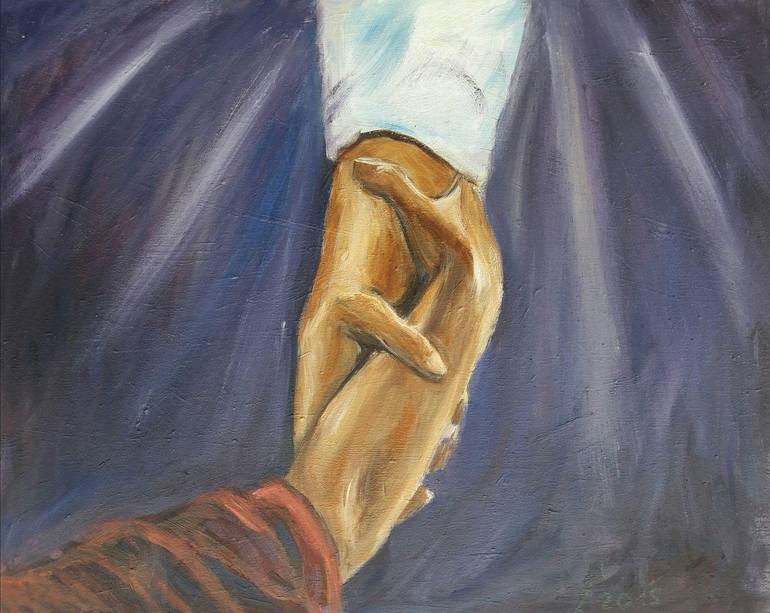
Humans, as storytelling beings, have forever cast themselves as the main characters in the universe’s great epic. All good stories have a beginning, middle and end, and the stories we tell are no different.
For almost all of history, people have inherited the stories into which they insert themselves. Judaism, Christianity and Islam, as well as almost all the other thousands of anthropocentric religions, have clear accounts of how we enter into, exist in, and exist this world.
People very rarely adopt religious views that do not have such a structure. Those not promising an afterlife, or some kind of complete unitary absolution, fail to gain very much traction. I wonder if this could merely be coincidence.
In the Western world, particularly Europe and parts of North America, the past few decades have seen a significant rise in secularism, atheism and agnosticism. While religious adherence remains strong globally, these shifts represent a notable departure from historical patterns.
This has had notable, obvious and extant positive impacts. Freedom of thought and expression, scientific and technological advancement, greater equality and human rights, and a space for ethical evolution.
Without being constrained by ancient texts, that reflect the ethical ignorance at the time of their conception, we have been abled to considerably advance our societies. But there have been disadvantages too. A loss of a shared moral framework, erosions of cultural traditions, and an increased sense of existential anxiety.
For many, this final point is too much of a bitter pill to contemplate swallowing. God must not be dead, for the void is otherwise too black for us to exist alongside. I do not count myself in such a group, but I very much empathise with those who do.
So deep runs the human desire for transcendence and ultimate meaning, that I find myself seeking what might be called “secular salvation.” Perhaps best described as the phenomena of waiting for a non-religious unification of being, it is a phenomenon I have long experienced.
I recall, probably around the age of twelve, thinking how nice it would be to believe in an omnibenevolent, omnipotent God. When asked if I was religious I’d say, “no, but if I could actually believe it then I would do so”.
This thinking was of the same piece as one of my darkest wishes from my younger years. I recall being so scared of death, so fearful of having to say goodbye to this Greatness, that I wished I would eventually succumb to dementia, and slowly ebb away.
Now familiar with the cruelness, suffering and terror that is attendant with this horrific disease, I now would instead wish the opposite. In the same manner, my desire to wish I believed in such a good has long passed too.
To clarify, I would prefer there to be an all-loving God, with who I could reside in eternity with forever, than there not be. I like living, and I like consciousness, and I have a strong preference for it to continue. The only issue is, however, that I just haven’t found any compelling reason to be so.
What to do, then, in the absence of such a presence in one’s life? The human desire for absolution, for consummation, for the complete unification of one’s being does not subside. In recent years, I’ve come to recognise how this religious impulse transforms itself in secular contexts. Particularly, in fact, in our relationship with art.
An album soon to drop from one of my favourite artists. The latest film to soon hit the big screens from my favourite director. I would wait with a terse and knowing excitement, that this piece of media would be the greatest ever.
Not in some trivial sense, that it would be worthy of some arbitrary subjective pinnacle status. Instead, in the sense that it would encapsulate everything I have ever expressed and felt and believed and experienced.
Put simply, I was waiting for art to save me. This manifestation might be called “aesthetic salvation”—the unconscious belief that the perfect artistic experience might somehow complete us.
Martin McDonagh’s The Banshees of Inisherin, Tyler the Creator’s Chromokopia, Charli xcx’s brat remix, and Denis Villeneuve’s Dune. I waited with baited breath, for some kind of aesthetic consummation. Of course, it never arrived.
Each, when they eventually dropped, were all deeply enjoyable. They expressed some interesting ideas, they often made me laugh, and they all stood alone as aesthetic triumphs. But so great was the weight I had previously attached to each, they all came too with an undesired sense of disappointment.
I’m reading a delightful book at the moment, Alain de Botton’s The Art of Travel. Fracturing his experiences of travel through the prisms of art, philosophy and literature, he constructs a book like no other I’ve read. It is rich in ideas, assured in prose, and unique in its synthesis and extrapolation of already lovely philosophy.
In a chapter about Van Gogh’s interpretations of Provence, the French region, du Botton interrogates an artist’s necessity to select and omit facets of reality. “As Nietzsche knew”, he writes, “reality itself is infinite and can never be wholly represented in art.”
This line puts plainly the realisation I have had in the past months. No music, nor painting, nor film is capable of refining all experience into one moment, as experience and reality is so infinitely complex.
This understanding arrives not as a crushing blow, but as a necessary recognition of the limitations of art—and, indeed, of any single system or experience that promises total fulfilment. Where the aesthetic cannot replace the religious in providing absolute consummation, neither can, I would argue, the religious.
So human it is to fear the cessation of us, that we look anywhere and everywhere for some saviour in some form. To those who find peace in religious places, I commend you. To those who find absolution in aesthetic appreciation, more life to your pursuits.
But if one is to take agnosticism or atheism seriously, we must be aware of the kinds of secular salvation we nonetheless seek. It allows for a greater compassion of those who look in religious places.
The temptation arises here to finish with some pithy line about how all this is okay. Something like “And you know what, that’s okay”, or, “And so, we must return to Sartre’s existentialist instruction – Create!”. On this occasion, I don’t want to do either.
On positive philosophies surrounding death, if you’re interested, I’d point you to an article I wrote a few weeks back. But instead of putting a positive spin on a seemingly bad hand, perhaps it is but sometimes to merely acknowledge existential concerns and sit with the feelings they evoke.
Perhaps, we must simply acknowledge the secular thirst without promising its quenching. In recognizing the limits of both religious and aesthetic salvation, we might find not resolution, but a certain clarity.
The void remains, and we remain with it—neither conquered nor conquering, but continuing.


Leave a Reply