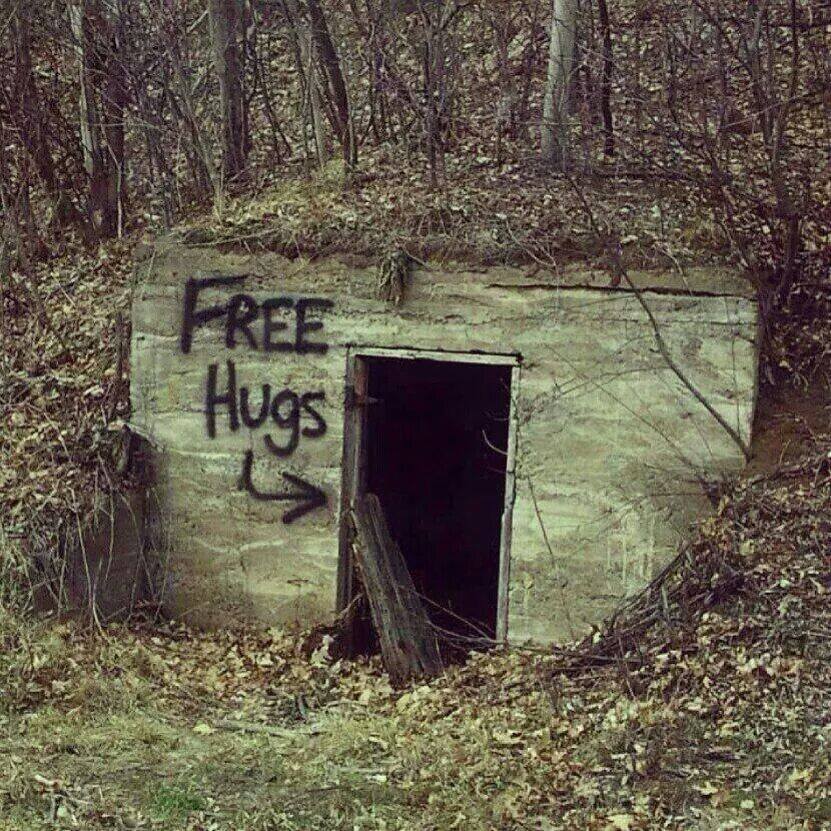
Everyone I love will die, likely after cruel illness. Death awaits us all, and yet we speak of it seldom. Why is this? Too depressing? Perhaps. And yet, without exception, it is the fate that awaits us all.
I have thought often lately about how quickly it feels my life is flying by. As the old joke goes, “Life is like a roll of toilet paper – the closer to the end you get, the faster it goes”. In “The Maths of Life and Death: Why Maths is Almost Everything”, the author, Kit Yates, posits various possible explanations for this phenomenon.
One thought is that time seems to pass more quickly as we grow older, because each year becomes a smaller fraction of our total lived experience. For a 10-year-old, a single year represents 10% of their life, but for a 50-year-old, it’s only 2%, making it feel less significant in comparison. By this logic, assuming you live to eighty, by forty you have lived half of your experiential life – spooky.
A different idea suggests it relates to the diminishing novelty of experience. In youth, experiences, events and moments are fresher, more memorable, and thus make time feel fuller. As we age, standout or defining moments become further and fewer between, and our perception of time is accordingly compressed.
This compression of time becomes increasingly apparent as we age. I know that any day now I’ll wake up and I’ll be 38, and any day soon after, I’ll (hopefully) be 86. Conversations with my parents and grandparents solidify this impression. Despite their rich and varied lives, they seem invariably to have whisked right past.
Our cultural reluctance to engage with death carries profound consequences, both practical and philosophical, revealing an urgent need for a shift in perspective. This death-denial, or at least death-obscuration, leads to much unnecessary suffering. The manifestations of this denial are both subtle and severe, philosophical and practical.
One instantiation of the latter is the shockingly low numbers of people trained in first aid in the U.K. (43%). Perhaps owing to the feeling that it won’t ever be us, millions neglect to know the basic principles of saving lives. While we ought to make peace with death, we also ought not surrender to its first attack without resistance.
Over the past few days, I’ve undergone aviation medicine training, and have been stunned by my basic ignorance. How do you deal with a stroke? How do you use a defibrillator? How does treatment for a heart attack differ from cardiac arrest? Until recently, I had no idea.
I’d wager the odds to be high that, at some point in my life, someone will require my assistance. Many of us are unprepared to help each other at this critical juncture. If we lived with a real awareness that you, and everyone you know, will pass someday, such negligence and apathy would not be possible. Our denial of death often means it arrives sooner than it needs to.
This denial manifests in other practical ways as well. According to relatively recent data, half of adults in the U.K. do not have a will, nor do 33% of those aged over 55. Obviously, this causes untold amounts of unnecessary conflicts over assets and finances, but also the deceased’s intentions.Captain Fantastic, one of my favourite films (Number 48). explores this theme sublimely. In coming to terms with our deaths, in openly talking with our loved ones, it will no doubt all be made easier, both now and later.
What a silly phrase that is, though, “coming to terms with our death”. How can a being, so fundamentally evolved to care about its self-preservation, even contemplate such a thing? We consistently struggle to conceptualise death. From a first-person subjective perspective, you have never known anything but existence. In imagining death, we often picture it as being “nothing” – i.e., no thing, which thus still predicates an idea of a thing. In philosophical and theological attempts to reconcile ourselves with death, we are thus often sweetly confused.
Fortunately, we have thousands of years of good philosophy to aid us in this standoff. Stoicism is useful, as well as admirable. And knocking on the reaper’s door with loving-kindness may too decrease unnecessary suffering.
Foremost helpful for me, however, has been non-dualistic meditation. We can gradually understand that our perception of self is just that, a perception; it is an appearance in consciousness, just like sound, thought or vision. In recognising this, the pain associated with our white-knuckle-clinging to existence can be relieved.
The following resources are extraordinarily profound and insightful – the ever-brilliant James Low’s series on Working With Life and Death, Harris’ exploration of the Paradoxes of Death, and the perspective of Frank Ostaseski, in a conversation here that very much changed how I see dying.
Although you don’t know it yet, there are a fixed number of days, weeks, months and (hopefully) years, that you have left on this earth. The implication of this is that there is a fixed number of times that you will share with your mother, if you’re so lucky as for her to still be alive now. Don’t neglect this. Every time spent, is one more deducted from the tally which is etched in stone somewhere. Father John Misty’s “Goodbye Mr. Blue” beautifully encapsulates this idea.
So often days and encounters pass us by, lost in a haze of worry, distractedness, or apathy. What a shame. In apocalyptic films, there is always a scene at the end, where a family, or a couple, or a group of friends holds hands and waits for their impending death. I would urge anyone to internalise this image, and live when and where you can. Tell the people you love that you love them; hold them close, and cherish their warmth.
By acknowledging the finite nature of our existence, we can transform our fear into a catalyst for meaningful action and deeper connection. The question isn’t whether we will die, but rather what we will do and how we will live, in the ever-shortening time before that arrives. Wake up. Smell the roses. Feel the love, and then share it.


 The Eye of an Archer
Leave a comment