Greetings, one and all. Another month has arrived, and thus another tour through my reading list is in order.
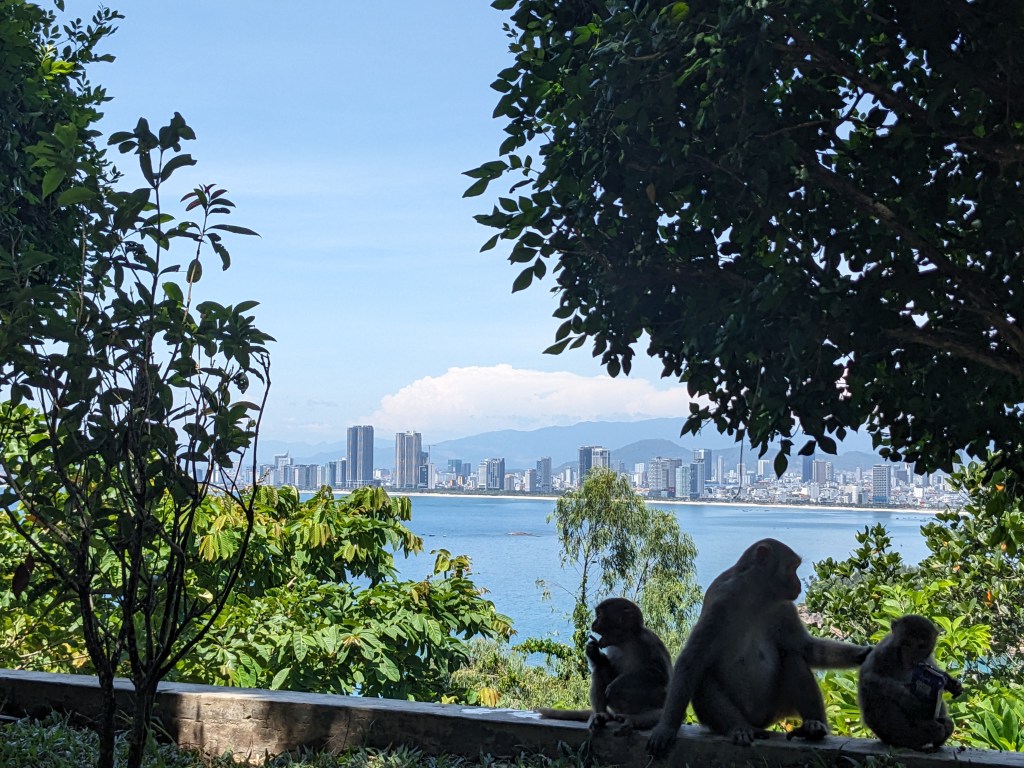
Foremost and first I would like to apologise for this post’s delay. Having arrived back from a trip to Vietnam with my brothers at the end of August, the fortnight since has seen my cousin get married, my post-graduate dissertation completed and submitted, then the undertaking of a four-day silent meditation retreat, from which I just emerged yesterday. These are not excuses so much as an account of an abnormally busy period, which I hope serves to underline I shall not be making a habit of untimely publishing.
I also have new inspiration for articles inspired by some of these experiences so keep an eye out in the coming weeks, for some changes to the website as well as plenty of fresh content. For now, however, it is my pleasure to share with you my reflections on what I read throughout August.
…
“The Sympathizer” (2015) Viet Thanh Nguyen
Structured as a confessional account of a Vietnamese man’s experiences of the war and its aftermath, this Pulitzer-prize-winning novel is truly terrific.
The unnamed narrator conceives of himself to be a figurative and literal ‘sympathiser’, being blessed and cursed to see any issue from both sides. He can hold in both hands two seemingly incompatible truths and as such maintains sympathy for individuals and organisations of pretty much every colour and creed of the political spectrum, to his advantage and his detriment. It’s a thrilling tale of espionage, an unfamiliarly even-handed account of the “American War”, and one of the best explorations of identity I have ever encountered.
The author far surpasses ventriloquism in his construction of this character – he is not writing as if he were another, he writes instead as the other. The narrator’s thought processes, his rationalisations, his internal justifications, and his reactions to the world around him are so singularly consistent in their tone and feeling, that it feels beyond the pale of imagination to conceive of this fictional character as, indeed, fictional. This is made even more impressive by the mental gymnastics the narrator performs to balance competing ideological, historical and pragmatic truths, from which can emerge his paradoxically constituted sense of self.
Part of this book’s genius lies in its reframing and recontextualisation of knowledge and perceptions we have received from both Hollywood’s and the Western history curriculum’s predominantly American-centric perspective. In addition to the narrator’s positioning, this is achieved through a clearly rich and personal understanding of the Vietnamese people and Vietnamese culture, through the shifting of locations and periods, and through its continued use of dark humour, which is genuinely funny. In exploring the greatest atrocities of this war and the most dangerous of ideas that facilitated it, this book strikes a balanced yet decisive tone, with the weight of the subject matter never dragging the story from the author’s controlled hands.
Whilst the life of the central character is extraordinary, I do get the sense throughout the book that Nguyen is not just communicating the narrator’s mental contortions, but that he is silently commenting on the fundamental nature of being a self-regarding self. We are constantly, no matter how mundane our lives, constructing narratives and stories that enable us to justify who we are and how we exist in the world. These stories of course need a main character, a role which we need a seemingly continual self to play, as well as a supporting cast of villains, heroes, goals, and fears. In playing this game, we need to somehow bend, contort, manipulate and reframe the seemingly contradictory beliefs and identities we hold, into an apparently unified and consistent sense of self.
Not only does the author communicate this with a subtle ferocity and exactitude that leaves one pitiful and perplexed at the absurdity of what constitutes most of the human experience, he dares also to suggest a means by which to reach escape velocity from this doomed game. As outrageous as the Evil-Knievil-esque narrative stunt that Nguyen ultimately attempts, I very much that both the author and his novel stick the landing.
An unrelentingly entertaining and masterfully written novel, it provides both a fresh take on one of our society’s most well-recounted historical periods and a blistering exploration of identity and meaning. The Sympathiser is a triumph and a testament to the talent-identifying credentials of literary awards. It is excellent and comes highly recommended.
N.B. The recent HBO series is fine, but so inadequate when compared to the source material. Just go read the book.
…
“The Bone Clocks” (2014) David Mitchell
Yet another work of Mitchell, and yet another enormous pleasure to get lost within.
Where Cloud Atlas feels linear and of a single orientation in its traversing of time and place, The Bone Clocks instead gives the sense of being situated on the edges of changing cogs and gears in a complex machinal construction. Short of reading the book, Noel Fielding’s “The Windmills of Your Mind” most closely evokes the feeling of being taken on this ride. ‘Like a circle in a spiral, a wheel within a wheel, never ending or beginning, on an ever spinning reel’. Oscillating through people’s histories, their minds and their experiences, the reader enjoys an experience of swinging abandon and methodical control.
Telling a story that transcends time and yet very much exists within it, Mitchell again demonstrates his genius in orchestrating a symphony of life so great that if you listen closely enough you can hear the rapid hum of its beating heart. Each chapter would represent an enrapturing story in its own right, with the first-person narrators a true delight to spend time in the minds of, all so meticulously and seemingly effortlessly conceived. Despite some representing subjectively unpleasant and immoral actors, the author writes with such glee and wondersome attention to all of life’s strange and beautiful details, that one cannot help but delight in their company.
Just as impressive is how he embeds his insightful observations of life and the human experience into a wider narrative arc. Threads of narrative seemingly unravel, before later being rethreaded into a mosaic of which they of course always belonged. Despite the wider story not gripping me in the vice-like hold of the individual ones, such a master of pacing is Mitchell that one is never sustainably disinterested. He retains an uncanny ability to turn the dials of emotion at his will, often reducing it to a seeming plod before ratcheting the reader back into uncontrolled page-turning.
A riot of a journey, in the assured stewardship of a masterful author.
…
“The Lotus Eaters” (2010) Tatjana Soli

Another novel about the Vietnam War, but this time instead following the fictionalised experiences of an American war photographer, Helen Adams, who enters as a complete novice and becomes a hardened combat journalist.
I ought to make two disclaimers at the outset. The first is that I read only the first 150 pages of the book. Whilst I believe in giving books a chance, I also believe there to be a functionally infinite number of great books worth reading, and thereby do not persist in reading books that I am not enamoured with or at least intrigued by. The second is that this book came highly recommended to me by multiple members of my family and has also enjoyed critical and commercial success. As such, I’d like to underline more than ever that the opinions expressed here are, of course, only my own. That said…
I didn’t click with it. Where The Sympathiser is electric and bringing of a fresh perspective, The Lotus Eaters is pedestrian and written from a perspective which is not as fresh as it feels the author believes it to be. Both books touch on the same broad themes (American arrogance, the humanisation of the Vietcong) and include some of the same historical sequences (notably the exit from Saigon), but the difference in effect is chalk and cheese. It treads literary and narrative paths I felt I have been taken down many times before, and when comparing its characters with those of The Sympathiser, they lacked comparable richness and likeability.
Part of this feeling certainly stems from two films I have recently seen that frame their stories around war photographers and the attendant ethical quandaries – Alex Garland’s excellent Civil War (2024) and Gareth Edwards’ breakthrough film Monsters (2010). As can be seen when comparing the respective dates of these films and The Lotus Eaters‘, it is not fair to lambast a lack of originality on this account. More disappointing however is the uninspired conceiving of its lead character, who pales in comparison to the depth and dynamism of both Kirsten Dunst’s and Cailee Spaeny’s characters in Civil War.
…
“The Courage to Be Disliked: How to Free Yourself, Change Your Life and Achieve Real Happiness” (2013) Ichiro Kishimi and Fumitake Koga
I found this book in a hostel in Ha Giang, and intrigued by its title (and grandiosely eyebrow-raising promises) felt compelled to pick it up. It so transpired that it is a self-help book, structured as a philosophical dialogue between a philosopher and a challenging youth.
Regarding the structuring, for the most part, I enjoyed it. I admired its novelty and it posed a fresh approach compared to most books of its sort. The patterns of the dialogue did ultimately become a little repetitive and tiresome, but I think this is just as much owing to the unnecessary length of the book rather than the writing itself. My favourite interplay of ideas was the reframing of anxiety, as being often just as much a construction used to remake others’ perceptions and to change our own as an uncontrollable manifestation of trauma.
However, like a lot of self-help books, I found it to be rather vacuous and empty of actionable ideas. The issues it attempts to solve are so large that I’m very sceptical that such sweeping prescriptions could ever be useful to someone. Most egregious though is the overemphasis it places upon individual responsibility, discounting the effects of ‘trauma’ and other previous experiences. The individuals introduced throughout the dialogues and their respective failures are devoid of real compassion, instead placing responsibility for their failings entirely at their feet. Not only do I believe this is an unconstructive way to build a compassionate society, I believe it to be philosophically untrue.
Millions of people have seemingly testified to this book changing their lives. I, for one, cannot see it.
…
As ever, I am delighted you felt it worthy to stop by. I wish you a good day, or a good night, and a good life. All the love, all the power.

 The Eye of an Archer
Leave a comment