
There’s a quote I love by Ralph Waldo Emerson:
“I don’t remember the books I have read any more than the meals I have eaten; even so they have made me.”
Whilst I often take refuge in this phrase when I consider how little I can remember about books I have read (the plots, the ideas, the characters, or the ways they made me feel), I think also that I would like to have a better recall of these things. As such, I’m resolving to experiment with using this corner of the internet to express, document, and collect my thoughts about the varying things I have read and am reading.
Some may be longer reviews with more thought and time invested, others maybe just a sentence or two surmising my core impressions, but I will endeavour to write once a month at least something about the books that I have read. If you have any recommendations on things I ought to read then I would love to hear from you and, as ever, I would love to hear your thoughts about anything I write.
With that, I welcome you with open arms, to the June edition of The Bookshelf…
…
“Utopia Avenue” (2020) David Mitchell

The music of the 1960’s: soaked in psychedelia, marinated in free love, dipped in antiestablishmentarianism, and sprinkled with more than a pinch of schizophrenia. Utopia Avenue follows the rise, trials, and tribulations of a fictionalised band of the titular name, navigating their way through the cultural decade.
Having read Cloud Atlas a few months prior, the book which propelled Mitchell into the public conscious, I was pretty well acquainted with his style of writing. Whilst much more conventionally linear than the time-bending, mind-splitting and century-spanning Cloud Atlas, Utopia Avenue nonetheless exhibits a similar chop-and-change structuring, constantly oscillating between earlier events and ‘present’ happenings in a manner reminiscent of Nolan’s Oppenheimer.
The book is structured, again both creatively and effectively, as three sections (named, respectively, after the band’s three albums), with chapters named after each song featured on each, and written from the perspective of the band member who wrote the song. In doing so, Mitchell succeeds in constructing complex and credible characters. Dean Marsh (a charismatic-Jagger-esque-Cockney-reprobate-frontman), Jasper de Zooet (a Dutch guitar player of aristocratic heritage, virtuosic talent, stunning intelligence, and a history of schizophrenia), Elf Holloway (a middle-class sexually-uncertain omni-talented Irish-English singer/pianist/guitarist), and “Griff” (a gruff, no-nonsense, masterly drummer, hailing from Yorkshire).
Most interesting and impressive was the construction and writing of Jasper. Providing an incredibly empathetic and seemingly nuanced portrayal of schizophrenia from a first-person perspective, Mitchell deftly weaves between past and present in building this beautiful, troubled, and uncertain soul. Dean, whilst difficult to connect with and apparently not as rich in character, ultimately edges into change and complexity, marking an impressively structured character arc. The same is true of Elf, although admittedly more difficult for me to connect with personally, and Griff evolves and develops in subtle and thought-provoking ways despite enjoying far little page time than the rest.
The prose itself is also deeply impressive. Almost every other page I came across a line which made me sit back and think, “Wow, that is an eloquent turn of phrase”, with Mitchell exhibiting a constantly evident talent to condense a complex philosophy or indescribable emotion into just a sentence or a line of dialogue. He has an impressive understanding and comprehension of the human condition, and treats his characters with consistent and honest empathetic kindness. Distributed throughout the novel are song lyrics and sections of poems, allegedly of each character but indeed of Mitchell’s own writing, that stand up in their own right and give further depth to the story.
The novel also does a stunning job in capturing how I imagine life in the music scene of the 1960’s to have felt, in the same manner that Tarantino did so elegantly when capturing the dusk after the sunset of cinema’s golden era, in Once Upon a Time in Hollywood. The band members of Utopia Avenue have frequent and chance encounters with many well known names and characters, including a pre-success-middling-Bowie, a post-success-troubled-Lennon, and a mid-crash-and-burn-Sid Barret. Building both atmosphere and realism, these imagined encounters display an impressive attention to detail, which enables the reader to forget the fictionalised nature of the central band, whilst also drawing on culturally acquired stereotypes and characterisations to do a lot of the world-building for him.
By the end, some of this constant name-dropping does ultimately feel a little bit smug and a rather repetitive. Indeed, this relates to what I’d deem my biggest criticism of the book. Some of the storylines are somewhat predictable, unoriginal, and slightly bloated in places, and I do feel that the almost 600-page novel would have benefitted for some more decisively clinal editing. The second half, despite featuring equally interesting and arguably more engaging sub-plots, felt like it dragged somewhat, and I did find the ending to fall rather flat, perhaps not achieving what I believe the intended impact to have been.
That said, it remains a deeply impressive and entertaining tour through the kaleidoscopic worlds of the 1960’s, mental illness, psychedelia, the human experience, and some of the greatest music ever produced.
…
“The Picture of Dorian Gray” (1890) Oscar Wilde
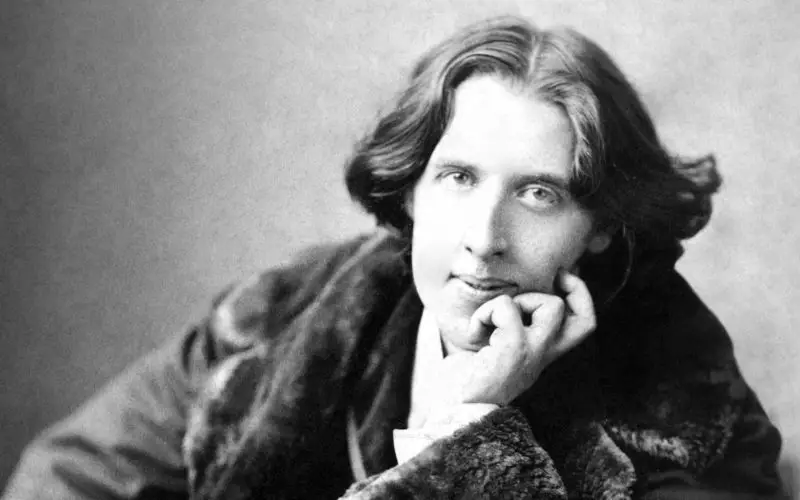
I read this while hiking the GR20, and it was one of the most pleasantly surprising books I’ve read in a long time. Having always known the name it by name, I’d imagined it would be dry, stilted, overly moralistic, and largely dated. How wrong I was.
Following the life of Dorian Gray, a beguilingly beautiful man, who develops an unhealthy vanity and an insatiable proclivity for pleasure after he is made aware of his own beauty by a portrait that is painted of him, this book is terrific.
It is witty, sharp, and breathtakingly astute in its representations and explorations of vanity, beauty, age, class and morality. The dialogue is magnificent, with his overly-educated, self aggrandising upper-class characters launching often into vacuous yet eloquent and thrilling monologues about the nature of humanity and Victorian society. His writing is also also stunningly descriptive, with every page conjuring in the reader’s mind the most vivid of images.
Positioning himself as a seemingly impartial arbiter, Wilde’s prose is soaked in sarcasm, wit, and critique of the upper classes, enabling a stunning critique of various virtues and vices, whilst never feeling like he is either sermonising nor moralising. Dorian Gray’s transformation and descent into depravity is gorgeously paced, and the ending delivers a satisfying albeit perhaps predictable culmination.
Deeply gratifying, astoundingly prescient, and well-deserving of its classic status, I profoundly enjoyed this book and would recommend it to anyone.
…
“The Wisdom of Insecurity: A Message for the Age of Anxiety” (1950) Alan Watts

I’ve long listened to and loved Alan Watts’s vocalised musings, both through the complete collection of his lectures on the Waking Up app and the innumerable lo-fi “chillstep” edits on YouTube. He is, perhaps, the most erudite communicator of ineffable spiritual and religious ideas I have ever encountered, capable of putting words and meaning to concepts and ideas that necessarily transcend such.
The Wisdom of Insecurity was impressively ahead of its time. In our extensively atomised, increasingly isolated, late-stage-capitalist day and age, abstract worries about future events dog our everyday lives. From finance-related worries about credit, mortgages and job security, to social and identarian worries about long-term relationships, children, education, sex and politics, and to existential worries about meaning, purpose and existence itself, there is no shortage of things to fret over.
Having evolved as social primates, living in tribes of no more than fifty, and being preoccupied only with worries of the present moment and the very near future (sleep, food, sex, shelter, not-getting-eaten-by-lions), we have not been blessed with an intuitive toolkit for conquering more abstract woes.
Watts’ approach is free-flowing, adeptly and constantly diagnosing our most common anxieties, locating their antecedents, then filtering them through the wisdom and teachings of the world’s great spiritual teachings. This is not a self-help book. It does not offer a step-by-step programme through which you can improve yourself. Nor is it a scientific psychological analysis of how one’s brain works. Instead it is a philosophical reflection, a meditation on why anxiety is so pervasive in our modern society.
Watts gained significant fame within the 1960’s and 1970’s for bridging the gap between Eastern and Western traditions, highlighting the core undercurrents of truth and strands of wisdom which flowed through them both. Drawing on his formal trainings in both Zen-Buddhism and the Episcopal Church, as well as from his comprehensive understandings of Hinduism, Daoism and other Eastern teachings, he brings a fundamentally non-dogmatic, non-sectarian approach to the subject. Always metaphysical but resolutely common-sensical, Watts’ writing only ever serves to elucidate.
The central messages of the book, as well as the solutions offered if they can be described as such, reside in the core idea that “You have arrived”. Approached from both a dualistic and non-dualistic perspective, Watts emphasises that the present moment is all that is true and real. The past is not changeable, nor will it be experienced again, and any idea we have about the future is just that, an abstract conceptual construction that will almost certainly not turn out as we conceive it to be. To be lost in either is truly to be lost. Respite and peace reside solely in the present moment and experiencing everything as it is. You have arrived.
In his speeches and lectures he always maintained a delightful wit, often making a joke within the middle of a considered musing about the nature of consciousness that underscored the point he was making and simultaneously had the audience riotously laughing. Despite maintaining a more serious tone in his writing here, there is nonetheless a proverbial smirk and upwards intonation waiting at the end of many sentences. What a joy and a privilege it is to have this man’s thoughts preserved in this manner, as he truly is a beautiful thinker and communicator of ideas.
I would recommend it to pretty much anyone who is curious about any of the concepts and ideas mentioned here. Accessible for people with no prior introduction to Eastern religion and spirituality, and a delightful meditation on an enormous source of suffering in our modern age.

 The Eye of an Archer
Leave a comment