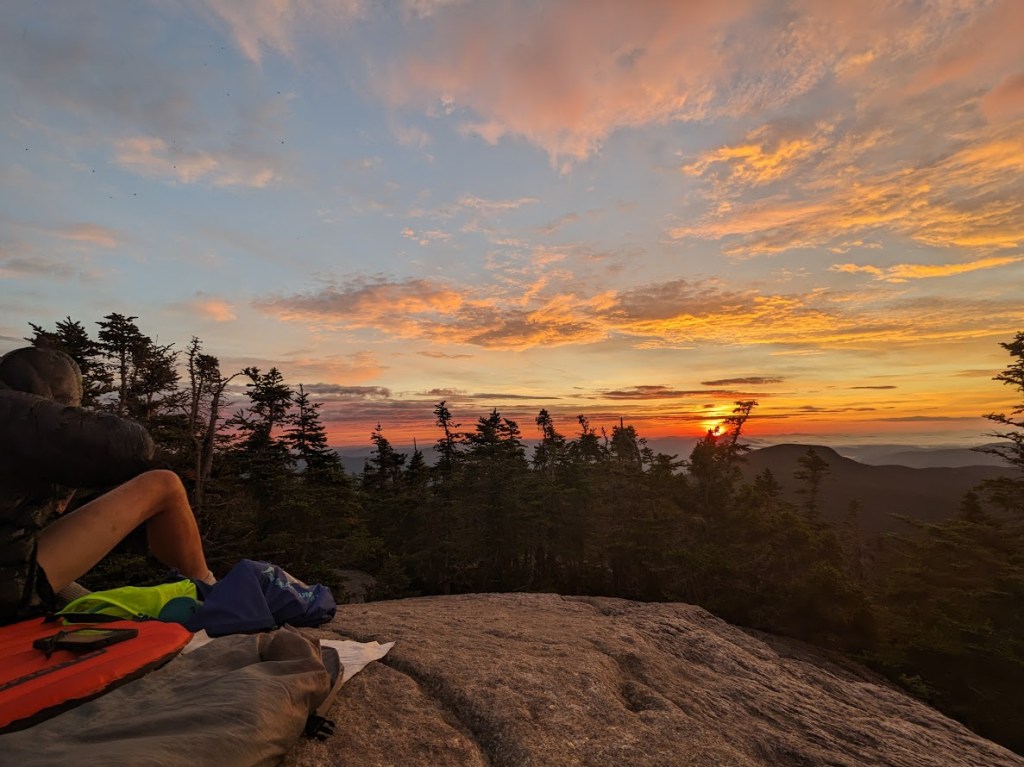
Prior to thru-hiking the Appalachian Trail, I maintained a clear and central philosophy: if I had the right gear and knew how to use it, then I could work everything else out once I was on the trail. Starting in February meant I needed gear that would take me through temperatures as low as -12°C and with it being the AT I knew I would need gear that could keep me dry through days of torrential rain. And knowing that I would have to carry on my back everything I needed, I had to stay highly cognisant of the weight of individual items. There’s no doubt that I got lucky in so many ways, but the community on the trail is so giving, welcoming, and accommodating and my gear was so good that there were, indeed, no major issues encountered through planning and learning for each day as it came.
A friend of mine recently messaged me saying that he was thinking about hiking the Appalachian Trail at some point in the next couple of years and asked if I could send him a list of all the gear I used. Always glad to think and talk about the trail, as well as overjoyed to hear he is maybe planning on experiencing what is (in my obviously biased and limited opinion!) one of the most extraordinary things in the world, I immediately set to drafting that list. Without initially intending to, I ended up quite comprehensively reviewing each item, sharing a (very) small number of anecdotes, and sharing most of the knowledge about hiking gear that I accrued in my five months on the trail.
After finishing, I figured that there was bound to be someone else out there on the vast expanse that is the worldliest and widest of webs, for whom this may be of utility or interest. I’ve added photos of each item where I could, as well as have provided further links to much more informative and erudite individuals and resources. As ever, if you have any questions (or disagreements!) about any of this, then please don’t hesitate to get in touch.
…
A few disclaimers and recommendations of other resources:
- All of the gear I recommend or critique here is almost invariably the first kind of each item that I’ve ever used or owned. Whilst this does mean I don’t have much to compare them to on a very personal basis, through talking extensively about gear with other hikers on the five months that I was on trail I feel I do have a pretty good sense of the advantages and pitfalls of most kinds of gear.
- Buying gear is a highly personal balancing act between three competing factors and values: Price, Quality, and Weight. Everything expressed here is by no means gospel – just a reflection on the conclusions, judgments, and opinions that I arrived at.
- The sub-headings next to each item are all taken directly from The Trek’s Appalachian Trail Thru-Hiker Gear List. This was, for a complete novice like myself, an invaluable resource for understanding what different kinds of gear offer, the top brands and products, and the advantages and disadvantages of different options. Check it out!
- (Perhaps unsurprisingly) I am not sponsored or affiliated with any company. All opinions here are entirely my own.
- A lot of what I say here is just unbounded praise of the gear I used on my thru-hike. Whilst this perhaps makes for less interesting reading, almost all of the gear served me fantastically well and I mostly only have great things to say about it all.
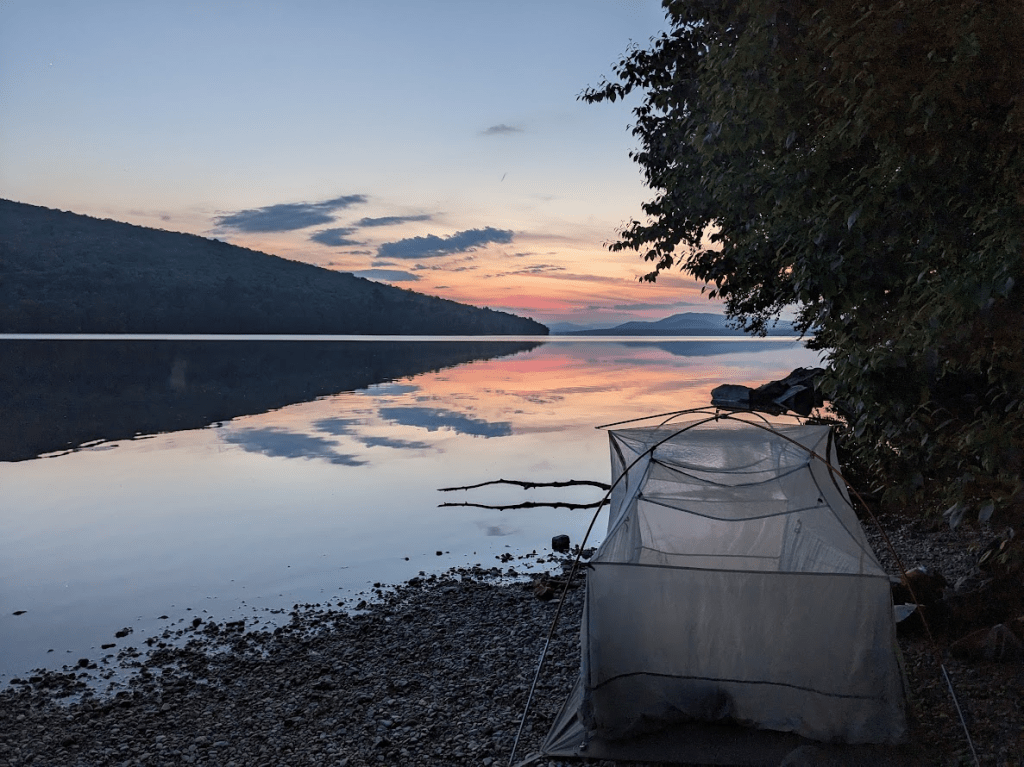
- All photos used are my own – all were taken whilst on the AT, aside from the tent in the snow photo (which was from my shakedown hike around Loch Ness, in January 2023)
- I haven’t included links for the websites that I bought the gear from, as my main focus was on just finding each item at the best possible price at the time. I’d recommend trying to start buying at least six months in advance if you can, to make the most of summer, Black Friday, Christmas and New Year sales, and so you can also test your gear well in advance.
…
There are so many amazing websites and individuals on YouTube who have a really deep and comprehensive knowledge of gear and the trail. In particular, I’d recommend:
- https://www.outdoorgearlab.com/
- https://thetrek.co/
- https://www.youtube.com/@FrozensAdventures
- https://www.youtube.com/@ChaseMountains
As well as some of the incredible people and friends whom I had the pleasure of hiking the trail with, who have great YouTube channels of their own:
- https://www.youtube.com/@chasingblazes2022
- https://www.youtube.com/@Fortuneadventures
- https://www.youtube.com/@Scottnorthbound
- https://www.youtube.com/@InTheBackcountry
- https://www.youtube.com/@beardedfroghikes
- https://www.youtube.com/@TaylortheNahamshaHiker
For reference, I found all the following online retailers to be excellent:
- https://wildbounds.com/
- https://ultralightoutdoorgear.co.uk/
- https://www.alpinetrek.co.uk
- https://www.trekitt.co.uk/
…
The Review
Tent? Big Agnes Copper Spur HV UL2
Personal experience? What a magnificent home this was (and is). There is so much space on the inside and tonnes of storage options inside it, so you can keep everything non-cluttered – “palatial” is the word I most used to describe it. It’s super easy to put up (less than five minutes), has loads of optionality if you also buy the groundsheet (you can use just the rain fly, just the inner mesh, or both together), and is also absolutely solid. I didn’t once have any leaks or issues with condensation, and there are so many guy lines that I was very rarely worried about it getting blown away. I love this thing.
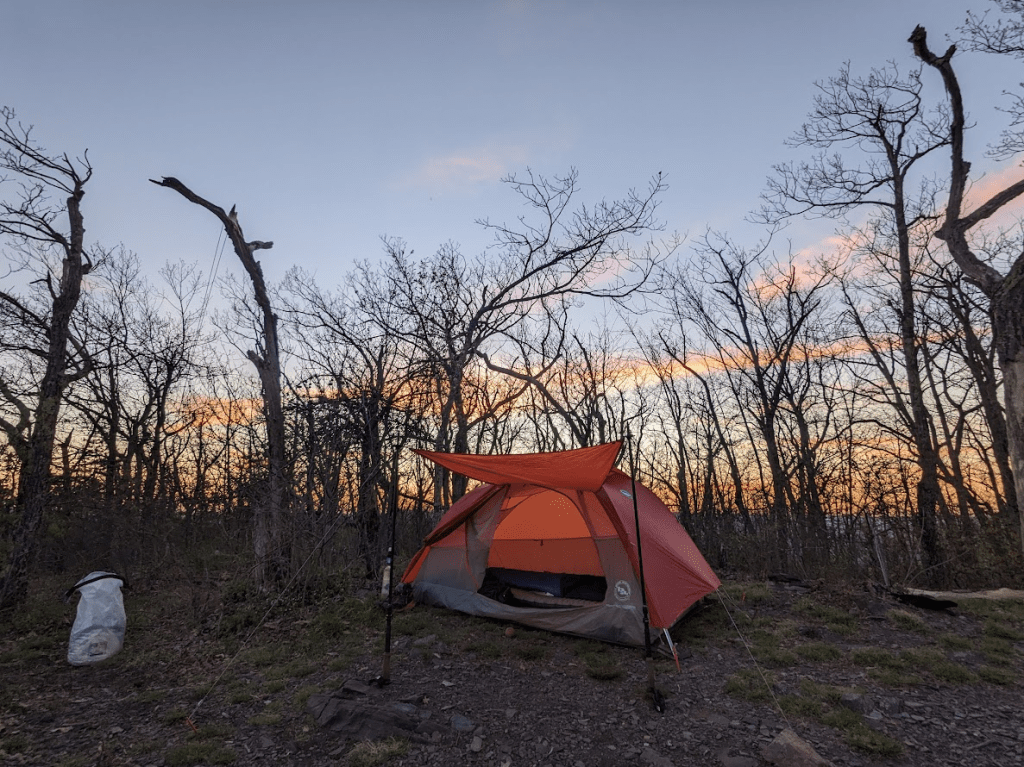
How does it compare? It is more expensive than a lot of other options and also weighs a lot more than a single-person trekking pole tent would. Having a two-person, free-standing tent is no doubt a luxury (and one that many hikers would argue isn’t worth the weight) but for me, it was worth every extra ounce. Your tent will be your home for five months and it is so nice at the end of the day to be able to be in a tent that is dry, spacious enough for you to move around in, and just so damn comfortable.

And how is it now? Aside from a clip that I snapped whilst trying to speed-run how quickly I could put up the tent before even arriving in the U.S. (entirely my fault), this thing is pretty much in as good a condition as it was when I bought it, and I think it should remain so for many years to come.
…
Hammock? N/A
I didn’t use a hammock but I hiked with multiple people who did. Almost all of them loved using them – they apparently provide great quality sleep, lots of warmth, and much more optionality (especially on a trail with as many trees as the AT!). Like anything, there are pros and cons, and there are great videos on YouTube contrasting them against each other.
…
Backpacks? Osprey Exos 58L
Personal experience? An excellent backpack that I really love. Tonnes of space inside and out, and it “carries” really well. Even if heavily laden with water and five days of food, the back support and hip belt mean that it still feels balanced and supportive. The pockets on the hip belt are super spacious (easily capable of fitting 3 protein or granola bars in each, or a pair of gloves and a snood), whilst the “holsters” on the sides of the bag are great for easily accessing your water whilst on the move. Due to my starting in February and thereby needing more clothes and a warmer sleeping bag, the 58-litre size was essential, but if hiking in summer then I think you could comfortably get away with a 48-litre pack.
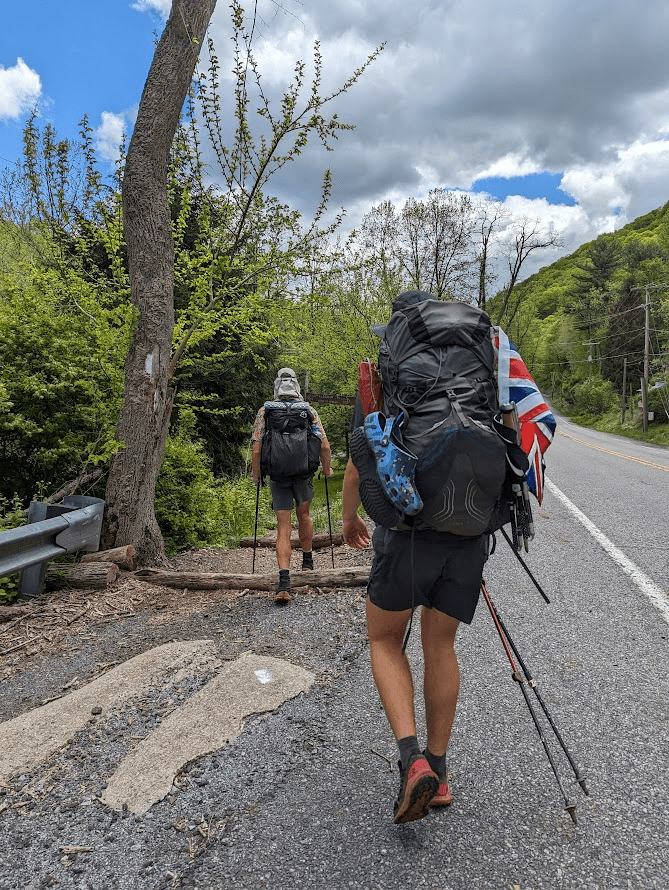
How does it compare? This was a very popular pack on the trail, perhaps the most popular non-ultra-light pack. A lot of people I hiked with were using Hyperlite packs, which are a little lighter and supposedly waterproof, although most people I was with said that they eventually ended up springing leaks. The Exos can also be equally as waterproofed as the more expensive packs, as I’ll outline later. In my opinion, the Exos is a great all-rounder: it is excellent for the price (more than half of that as the Hyperlite), provides great support, and optimises space utilisation.
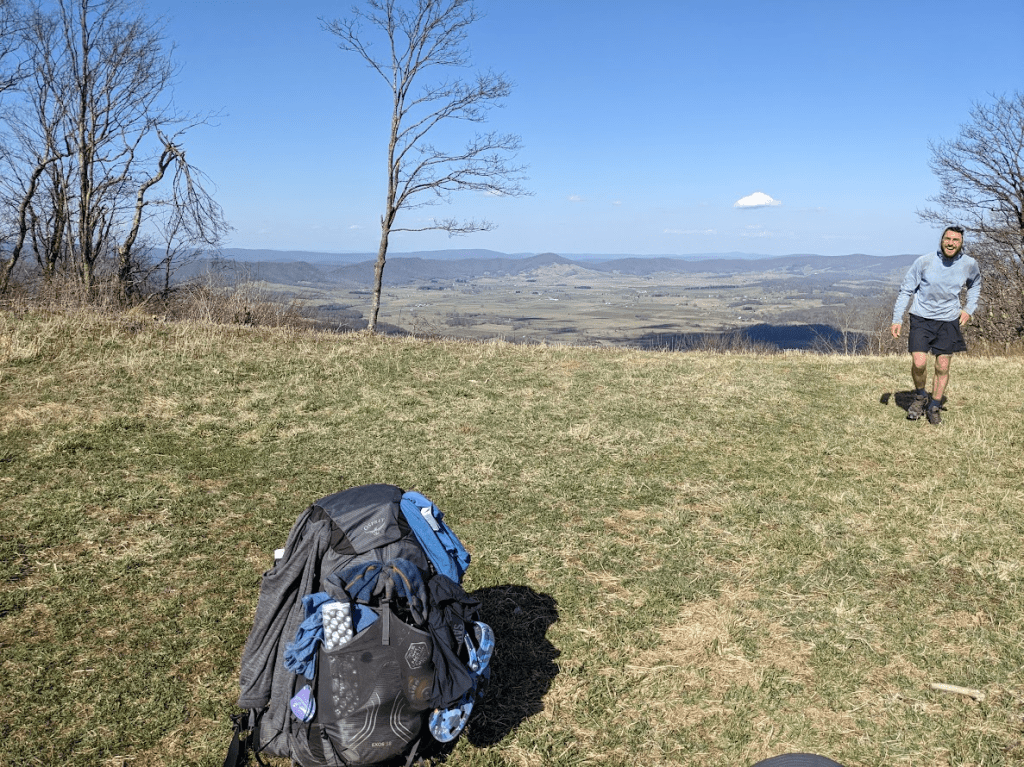
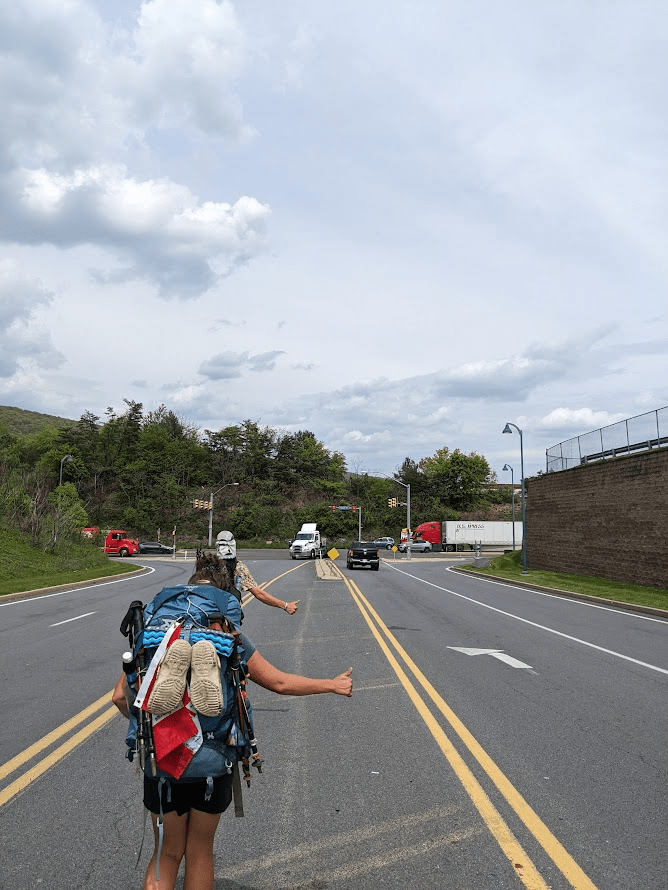
And how is it now? The pack is still in fine working order. Some of the straps have lost their tension and there are some minor scuffs and tears, but I’ll certainly be taking it with me on my various missions this summer. Osprey also have an amazing warranty on their products, so this pack should last me a long while.
…
Sleeping Bags and Quilts? Rab Neutrino 600
Personal experience? An extraordinary piece of gear. I’d never before owned or used a down sleeping bag and the warmth that this thing provides quite frankly blew me away. It kept me alive on nights when the temperature fell as low as -12°C, thanks to the insane amount of insulation it has within it, the really high quality of the (ethically sourced!) down, as well as the double cinch (on the hood and the neck) which allows you to fully cocoon yourself in. It also unzips pretty much the whole way down, which means that in the summer you can use it more like a quilt (as it would be way too warm to be inside it fully zipped up!).

How does it compare? I’d say the majority of people I was with were using quilts rather than sleeping bags, with the Enlightened Equipment quilt being extremely popular. Whilst the Neutrino 600 is a phenomenal sleeping bag that I would (and did!) trust my life with, I think that if I were to thru-hike the AT again I’d opt for a quilt. They can still provide a load of warmth (when paired with a good sleeping pad) and create increased optionality.

And how is it now? I still love this sleeping bag and will use it for years to come. The one issue I had was that down regularly escaped through the seams in the foot box of the bag, requiring me to consistently patch it up with whatever tape I had on me. I don’t believe this is an issue with the quality of the bag, but more because I move and kick a lot in my sleep. That said, there is probably 30% less down in the footbox, which in turn has resulted in a perceptible decrease in the amount of warmth it provides. Still, after washing the bag once I returned home, it has retained most of its original loft and remains a warm and reliable option.

…
Sleeping Pads? Thermo-Rest Neo Air X-Therm
Personal experience? This thing is an absolute beast. Incomparably warm, extremely reliable, and very comfy too, I absolutely loved this sleeping bag. It is relatively quick to blow up, never deflated in the night, really quite light, and kept me warm even when sleeping directly on snow.

How does it compare? As far as I’m aware, this is the warmest sleeping pad on the market, clocking in with an R-value of 6.9 (the new model is 7.3!). For context, the Thermo-Rest Neo Air XLite has a 4.5 R-value, whilst a standard roll mat is around 0.5. Additionally, most people I was hiking with had pads burst or deflate (including Nemo Tensor, Big Agnes pads, and XLite’s) but I didn’t meet a single person whose X-Therm had any major issues. The only criticism of it I heard is that it is “overkill” to have such a warm pad on the AT. Only on a couple of nights was it ‘too warm’, but if you’re hiking in the height of summer then I’d imagine it could be a bit too much.
And how is it now? In absolutely fine fettle. Still no punctures or leaks, I’m sure I’ll be able to use this for years to come. The pump sack broke at some point in Virginia but it can still be inflated easily. If you want to treat yourself, a few of my friends carried with them an electric pump and described it as their favourite bit of kit.
…
Hiking Footwear? Salomon Sense Ride 4
My personal experience? Ahhh… The Salomon Sense Ride 4’s. Reliable, sturdy, versatile, forgiving, and comfortable, I grew very fond of these shoes. The lacing system is great, the sole is well-cushioned, and I rarely rolled my ankle whilst wearing them. Going through three pairs in total, I managed to get about 700 miles out of each pair and used the same mode and size for the whole trail (aside from a couple hundred miles in a pair of Brooks Cascadia’s, that I found in a bin in Monson, Maine). The only real downside is the narrow toe box characteristic of most Salomon shoes. This wasn’t an issue at the start but as the arches of my feet gradually flattened and my feet got wider (this is actually a thing!), they were too narrow and my feet blew holes through the sides. They gave about 400 miles each with no signs of real wear and tear and managed to grant a further 300 miles aided by lots of Gorilla Glue and duct tape, before all the grip wore off and they fell apart.
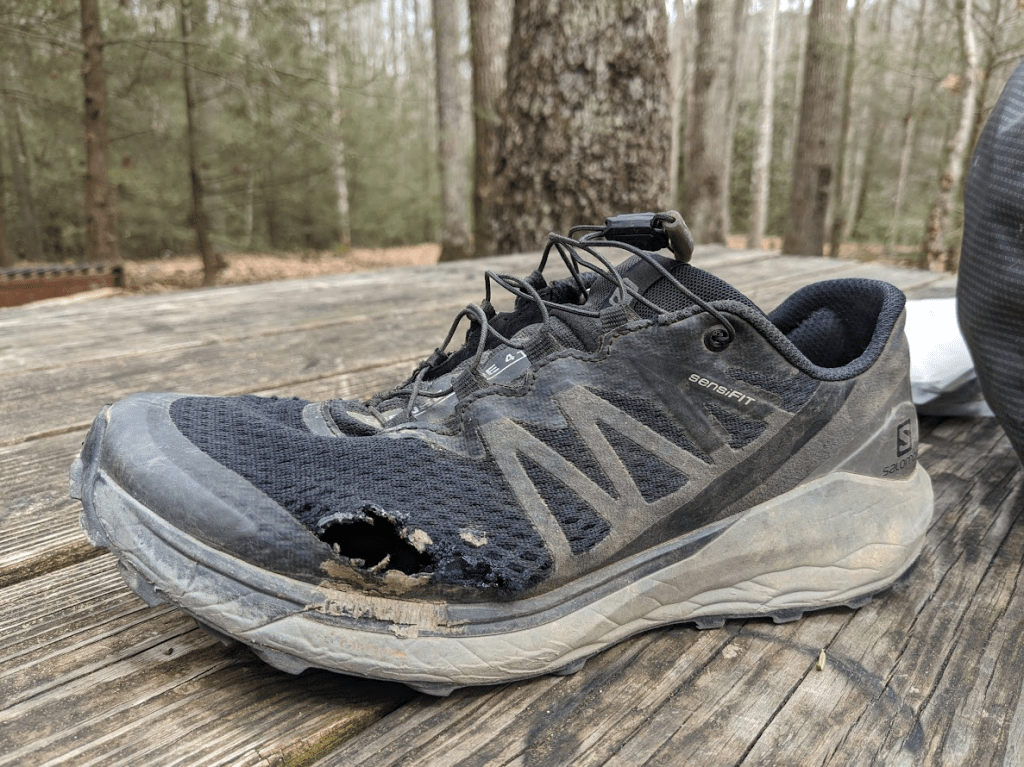
How do they compare? Shoes are so personal but so important to get right. There are various pros and cons for trail runners vs. boots… The pros of proper hiking boots are that they typically are waterproofed, that they offer ankle support, and you can get more miles out of them (1000+ miles whereas for trail runners you can expect roughly 400 miles). Pro’s of trail runners are that they are way lighter (studies have shown that every extra kg on your feet is equivalent to an extra 5kg on your back), when they get wet they will dry out very quickly (whereas wet boots take ages to dry out), and they typically have more cushioning and more versatile. As far as trail runners go, the Altra Lone Peak’s (wide toe box and light) are hugely popular for very good reason but they seemed to last people fewer miles (300ish). I can personally attest to how enjoyable the Altra Olympus 5’s are (great cushioning and super wide toe box) and lots of people like the Hoka One Speedgoat too (incredibly well cushioned but I think maybe a little bit too much so).
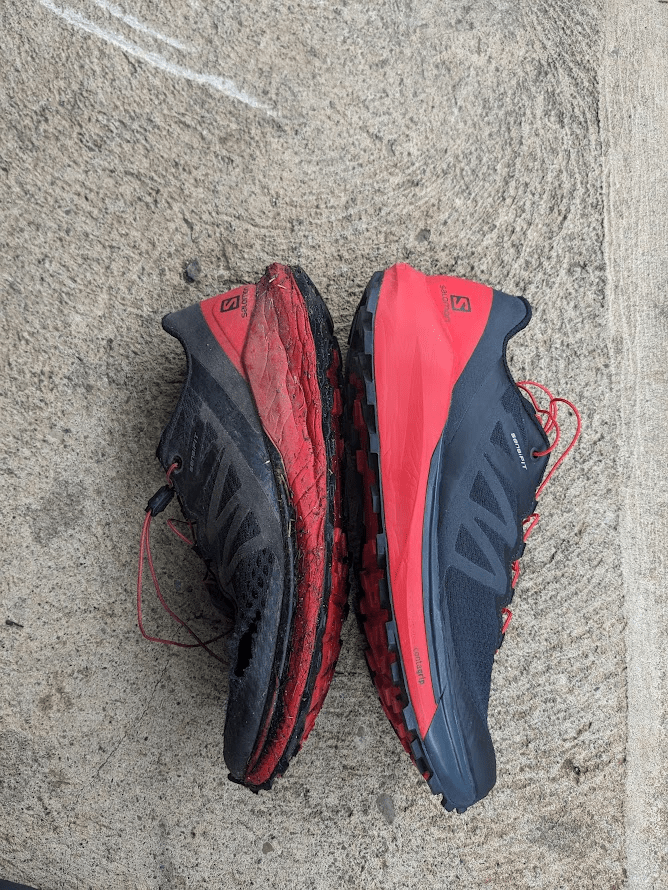
And how are they now? All the pairs I used on the trail are no longer in operation (a.k.a, completely destroyed). Upon returning home, I bought a pair of Altra Olympus 5’s which I really like. I’m not sure however whether I’ll be taking them with me whilst hiking this summer or getting a new pair of Salomon’s (cushioning vs. stability, zero drop vs. stacked etc.).
…
Hiking Fleeces? Mountain Equipment Lumiko Hooded Jacket
Awesome bit of kit – the ribbed knit is very insulating, and ultra-light, the pocket on the chest was super useful, and I loved how tight the hood fitted over my head. I’d wear this in the evening at camp, I wore it all the time when cold, and layered it under my rain jacket when it was chilly. I found this guide useful on how to layer well. Over time it has become slightly less tight-fitting but it remains highly functional and I wear it often.

…
Insulating Jackets? Rab Electron Pro Down Jacket
What a wicked piece of gear. You may have guessed by now that I am a huge fan of Rab’s down products. This jacket is insanely well-insulating and is packed full of high-quality ethical down, including the hood. The baffles are well-placed and spaced, and there’s a great cinch on the hood and ample pockets. I primarily wore this in the evenings (pretty much every night!) as well as to hike and sleep in on the coldest nights. There are lighter options out there but none that insulate as well as this thing.

…
Rain and Wind Protection? Black Diamond Storm Stretch & Karrimor rain pants
The Storm Stretch is a fantastic jacket, especially for the price compared to other great jackets (OR, Arc’teryx, Rab). Whilst every rain jacket does eventually wet through, this kept me dry through torrential and consistent rain and still maintains those qualities now. The pit zips are excellent for temperature management and the jacket packs down quite small, also being relatively light. As I’ll discuss further in the trekking poles section, Black Diamond is a truly impressive company with a terrific customer service team and generous warranties.
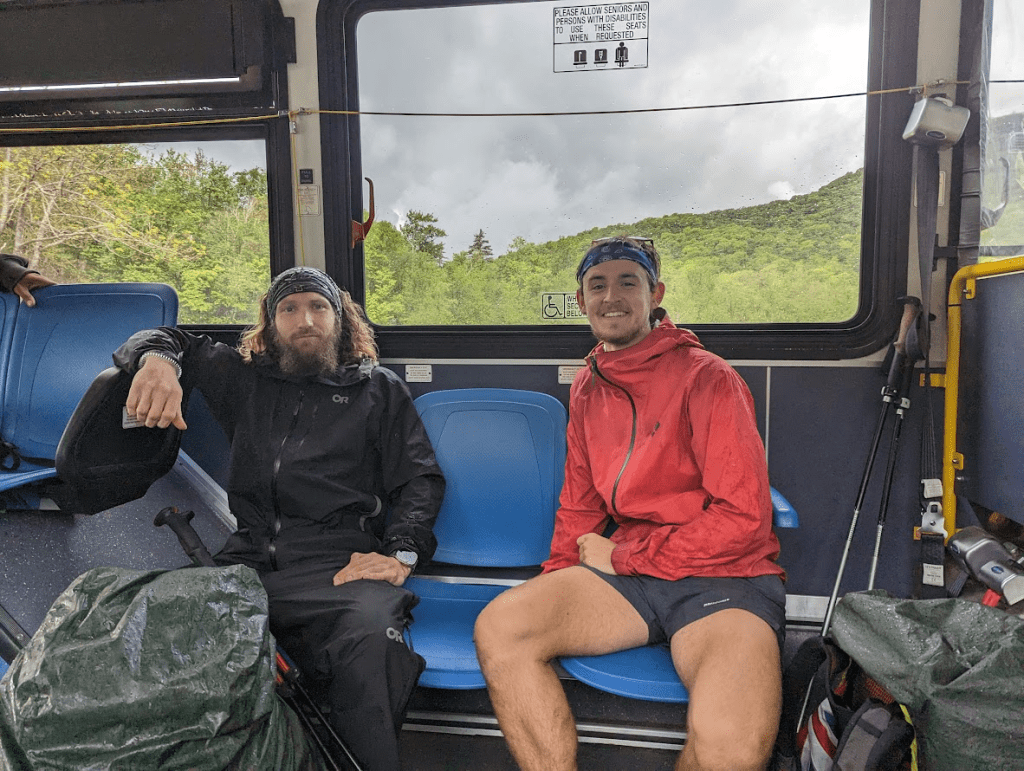
Nothing good or bad to say about the rain paints – adequate. I rarely actually used them in the rain (just opting to wear shorts, as they were so quick drying). I didn’t bring any hiking trousers, so often used them over my leggings around camp on colder evenings.

…
Socks and Underwear? Darn Tough, Injinji, Saxx
Darn Tough are undoubtedly the most popular socks on trail and this is for very good reason. They’re super comfy, extremely well-built (I’ve yet to wear through any of my pairs that I’ve been using since even before the trail), and they have a lifetime warranty as well. Most outfitters on the trail stock them and a lot of them will let you swap your old socks out for new ones in store.
Injinji are most famous for their liner ‘toe’ socks. They have some that can be worn by themselves, but in my experience are best when worn under a pair of thicker socks. For the first two weeks on trail, my feet were blistered, red, raw, and constantly bleeding. This was until I met a hiker (trail name “Trash”) in a shelter one night and he incredibly kindly gifted me a brand new pair of injinji liner socks that he had in his pack. They were an absolute game changer – from this day onwards I experienced no more blisters. The individualised toe compartments/sleeves/fingers (?!) stop rubbing between your toes, and by double layering the socks it means that the socks rub against each other, rather than your feet rubbing and chafing inside them. I went through probably three pairs on trail but they were worth every penny.
Saxx Boxers’ central USP is their trademarked “BallPark Pouch” and I love these boxers. The Patagonia shorts I wore have an inbuilt liner, and plenty of hikers thus choose not to wear pants, but I much preferred doing so. I found them to massively reduce chafing, they stopped my shorts from getting as gross and sweaty, they breathe well, and the synthetic material means that they don’t smell nearly as bad or as quickly as cotton or other materials would. The two pairs I took with me are as good as new today.
…
Hiking Bottoms? Patagonia Men’s Strider Pro 5”
These shorts are super dope. The retail price (around £80!) is undoubtedly quite outrageous for a pair of thin running shorts but if you can find them in a sale for ~£45, I think they’re worth it. The material is super light and breathable, they look great, and the liner makes them massively comfy. The real selling point for these things though is the pockets. Featuring two stretch pockets on each hip, as well as a zip pocket on the exterior, you can fit so much in these shorts. The elasticated pocket design and positioning on the hip means that your phone/snacks/wallet don’t bounce around in them, whilst the zip pocket is super useful too (although it can be a little annoying if you have your pack sat low on your back). I managed to get about 1,500 miles out of the first pair (aided in the end by lots of duct tape and super glue!) and bought another pair right away which are still in great nick.

…
Hiking Tops? Icebreaker Merino Blend Core T-Shirt / Synthetic standard Adidas shirt
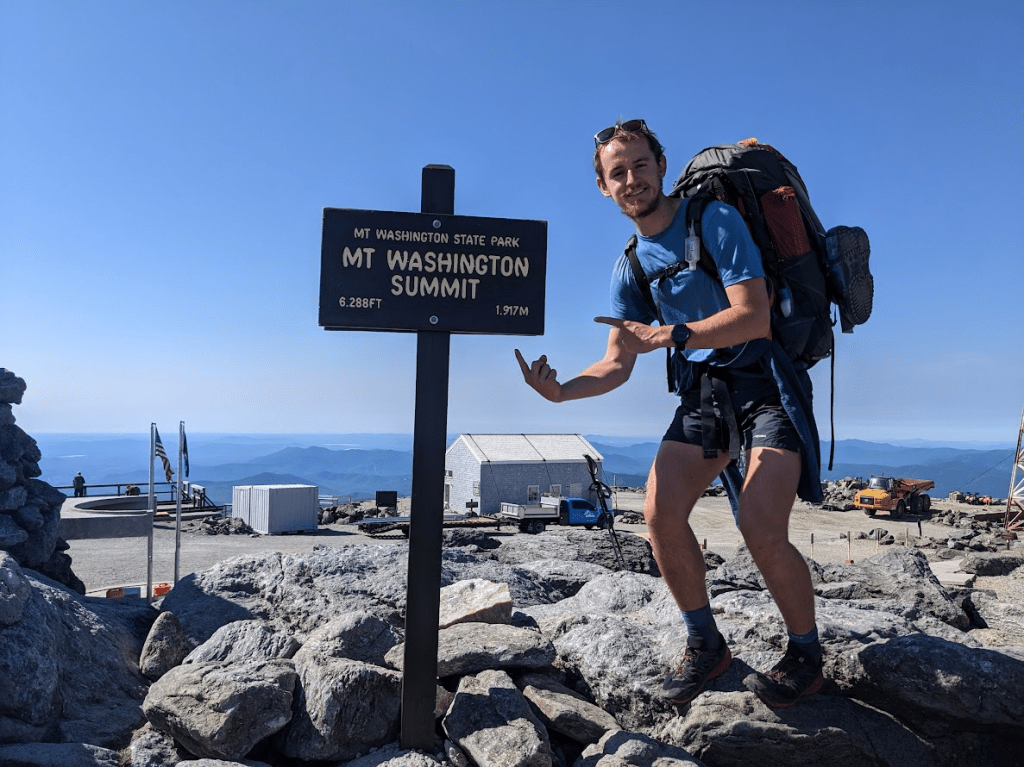
Regarding t-shirts, look no further than the Icebreaker Merino Blend Core T-Shirt. Striking the perfect balance between synthetic and Merino wool, it retains the breathability & quick-drying-ness of the former, as well as the heat regulation, anti-stink & comfort properties of the latter. This was my go-to t-shirt whilst hiking and I can’t wait to get it back on again this summer. It did end up with several ‘ladders’ and rips in by the end, but I have since stitched it back up and it’s no doubt got a lot of life left in it.
…
Base Layers? Amazon synthetic top and bottom base layers
I wasn’t planning on taking additional base layers, for fear of carrying too much weight and not needing them, but was given a set for Christmas and ultimately decided to take them with me. Whilst they were quite heavy, I was ultimately really glad to have them. On colder days and nights they provided additional layers and provided further optionality whilst on colder days. If you’re starting as early as mid-February (and not taking hiking trousers) then I’d say some kind of base layers are essential.
…
Camp Bottoms? DLX merino wool bottoms & Isobaa Men’s Merino 150 Short Sleeve
Merino is super warm and smells less than synthetic. Super nice to switch into at the end of the day, as well as wearing under everything else on really cold days. The (skin-tight, warm, and comfy) leggings ultimately ‘laddered’, but I’ve stitched them up and they’re still very useable. The t-shirt is an excellent Merino wool t-shirt and is still in great condition.

…
Gloves and Hats EDZ? Merino Wool Gloves / Two bandanas / Three buffs
The quality of EDZ’s Merino Wool Gloves is so impressive – and the price is just phenomenal. I still have the same pair that I initially brought with me on the trail and they are incredibly warm, snug-fitting, soft, and durable. I ummed and ahhed for a long time about whether to get rain mitts but in the end never did. They seem (to me at least, as well as to people I spoke to who had them) overly expensive and largely ineffectual. My dear friend “Little Engine” used washing-up gloves over her liner gloves which (whilst sounding ridiculous) worked great.
I carried with me three buffs/snoods and these were indispensable. I used them as a beanie, a bandana, a neck warmer, and as a pillowcase every night (if you slide one around an inflatable pillow, the pillow becomes way more comfier and doesn’t slide off your sleeping pad as much.
Along the way, I also picked up a number of bandanas and headscarves, which I wore every day whilst hiking, and brought with me a wide-brimmed sun hat and a beanie that my auntie knitted, both of which I loved having. Having this many “headpieces” is certainly not necessary, and most certainly not ultra-light, but I loved the choice and variety it provided.

…
Camp Shoes? Crocs
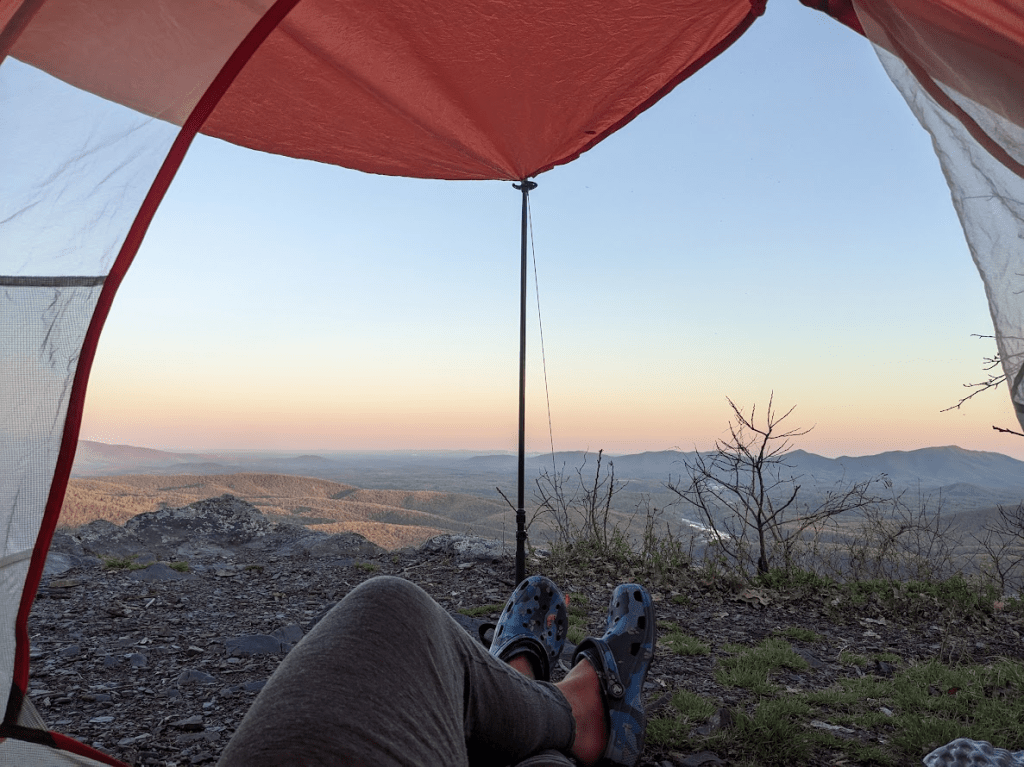
Camp shoes are one area in which I think there are no right or wrong answers. Some people bring Crocs, some bring sandals, some flip flops, and others just eschew them entirely, instead opting to just wear their hiking shoes around camp. I was a big fan of my Crocs though. They’re super comfy, they allow your feet to breathe and move around after a long day of walking in cramped shoes, they can be used for crossing rivers and fording streams, and they can easily be stored by just hanging them on the outside of your pack. They do weigh ~1 pound, a weight that some thru-hikers think makes them a preposterous luxury, but this added weight was worth it for me.
…
Stuff Sacks? Waterproof dry bag set from Amazon
Stuff sacks are invaluable for organising your pack and keeping everything dry. I used multiple sacks (of varying sizes) to separate my sleeping clothes, spare clothes, electronics, food etc. There are stuff sacks (e.g., those made by SeaToSummit) that are admittedly lighter than these Amazon ones, but I saw many people’s tear and (in my opinion) are extortionately expensive. They’re still functional now, although the waterproofing has deteriorated a little. Unless you’re trying to shave off individual grams from your total pack weight, then I would highly recommend these Amazon ones.
…
Cooking Gear? Toaks (style) Titanium Pot / MSR Pocket Rocket 2
There are many different options for cooking gear (The Trek article outlines them very well) but I was mightily content with my setup. The titanium pot (an Amazon knock-off of the Toaks one) functioned extremely well: easy to clean (after cooking porridge or noodles or rice in it), super light, incredibly durable (in the same condition as it was when I left), and it heats water quickly. It also came with a folding titanium spork, which I enjoyed, although I would swap this out for a longer spork in future (to make it easier when getting food out of the bottom of the stove).

The MSR Pocket Rocket 2 is also a highly impressive piece of gear. It is simple and intuitive to use, attaches directly to almost any kind of gas, is very durable (again, still in full working order), it heats water very quickly, and you can adjust the heat/intensity of the flame. The only notable drawback is that the flame is exposed (meaning it can be difficult to use in high winds) although I didn’t find this to be an issue. Top piece of kit.
…
Trekking Poles? Black Diamond Alpine FLZ / Tree branches
These poles marked my only significant gear failure from the whole trail. The Alpine FLX are very light, have super comfortable cork handles, are easily adjustable, are pretty solid (being made from aluminium rather than carbon), and fold down smaller than any other pole I have come across. For the better part of 600 miles these things were excellent, for all the reasons outlined above. At this point, however, several issues began arising. The internal tension mechanism broke (on both poles, within 50 miles of each other) which meant I could no longer collapse them, and 300 miles later they both snapped entirely. I called Black Diamond, explained the issue I had, and (because of their excellent aforementioned customer service team and warranty policy), they shipped a brand new pair (also of the new and improved model) to a post office further up the trail. This new pair felt great but, again, broke after a few hundred miles (they locked out and the internal mechanism broke). Black Diamond sent me the parts to fix them, which worked a treat, but for fear of breaking them again, I didn’t fold them down until the end of the trail, by which point they were completely rock solid and I couldn’t bring them home. As a pair of poles for multi-day hikes or medium-length trails, I would recommend them, but I don’t believe they are sturdy enough for a thru-hike.

Whilst waiting for the new poles to arrive, in the intervening 100 miles I just used sticks and branches I found along the way. The aesthetic is great, they function adequately and are certainly better than nothing at all, but I do believe trekking poles to have greater functionality. That said, a friend of mine named Benny (trail name “Big Stick”) had hiked the whole of the AT (in something like three months) as well as the PCT, with only a (big) stick for support. Pretty cool if you ask me.

…
Headlamps? Black Diamond Spot R
Terrific headlamp. Water-resistant, with four different modes of light, a dimmer function for all of them, intuitive use, and comfortable to wear, this is an excellent product from Black Diamond. Mine is still in great shape today and I’m confident I’ll be able to use it for many years to come.
…
Purification? Sawyer Squeeze and Smart Water Bottles
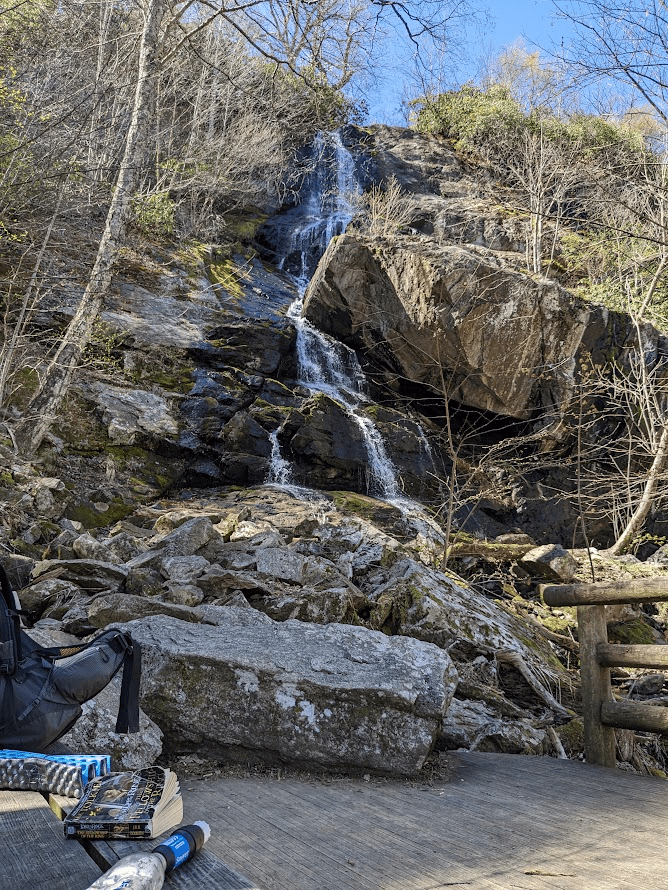
Again, there are lots of different options for water purification and carrying (don’t bother with purifying tablets; the Katadyn Be Free is pretty cool). I opted for the classic Sawyer Squeeze and Smart Water bottle combo and would most certainly recommend it to anyone. The Sawyer Squeeze (the regular one, not the Mini) has a great flow rate, is easy to backwash, and is intuitive to use. In the UK they cost at least £40 but in the U.S. you can find them in any sizable Walmart for about $20. I replaced mine around halfway through the trail, as the flow rate had massively slowed down, and the second one still works now.
Smart Water bottles are cheap and easy to replace when they break. I carried one bottle for dirty water, one for clean, and several bladders that came with the Sawyer Squeeze when I needed to increase my water capacity.
…
Sleeping Bag Liner? Walmart ($7)
I hadn’t bought one before arriving in the States and bought a $7 one from Walmart just hours before hitting the trail. I think it’s some kind of polyester blend, was pretty soft, and provided a barrier between my dirty self and my pristine sleeping bag – it’s so much easier to wash a liner than a bag! Sleeping bag liners can be used to increase the temperature rating of your sleep system but this one almost certainly did not. Other, more expensive options, are also lighter as well as more warm, but if you’re looking to save a few £’s at the expense of a few grams, then a cheaper option will certainly suffice.

…
First Aid? Zip lock bag
Just filled a zip lock bag with all the things I needed and it worked perfectly. Light, easily accessible, and cheap.
…
Toiletries? Zip lock bag, insect repellent, sun cream
Again, I just kept all my toiletries in a zip-lock bag and took with me a toothbrush, toothpaste, SeaToSummit’s all-purpose wash (an amazing product), floss, and sun cream. I’d massively recommend taking a few extra zip-lock bags as they are so useful for separating foods, keeping your phone dry when it’s raining, keeping a roll of toilet paper in, and much much more.
…
Guidebooks? FarOut App
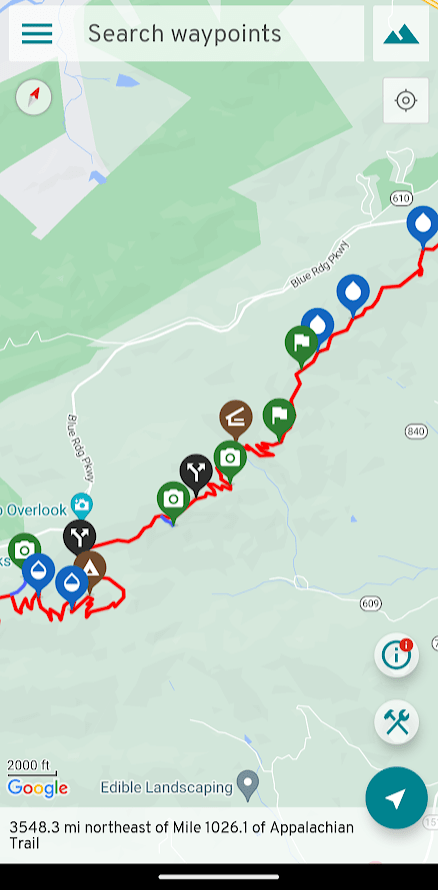
FarOut is a phenomenal resource, worth every single penny, and the only guide you need. It marks so many things (shelters, campsites, water sources, towns, resupply points, mountains, points of interest etc.), shows distances and elevation gains between all these points, marks your location (even if your phone is on aeroplane mode), and has a comments section which allows the AT’s active and thriving community to recommend, warn, and provide insight about all kinds of things. I reckon at least 90% of thru-hikers used it, and I don’t recall seeing anyone use physical maps. In my opinion, the AT is so well-marked that FarOut alone will suffice.
…
Luxury Items Massage ball / Books / Thermarest Z seat sit pad / Towel / Inflatable Pillow / Sunglasses
I picked up a cork massage ball from an outfitter in a town called Daleville, VA, and used it every night after. Very light and useful for rolling out your feet and legs in the evening, after a long day of hiking.
The Thermarest sit pad costs about £20 – a price I thought preposterous for a small piece of foam. I eventually found one in a hiker’s box in Pearisburg, VA, and am now convinced that it’s worth every penny. It’s a great luxury to be able to sit on this thing rather than the cold/muddy/frozen/rocky/dusty/hard ground, as it is pretty well insulated and soft too. It’s way lighter than any other sitpad I’ve come across and folds down small. It’s also useful as a windbreaker for your stove, as extra protection underneath your sleeping pad on rocky patches, and much more.
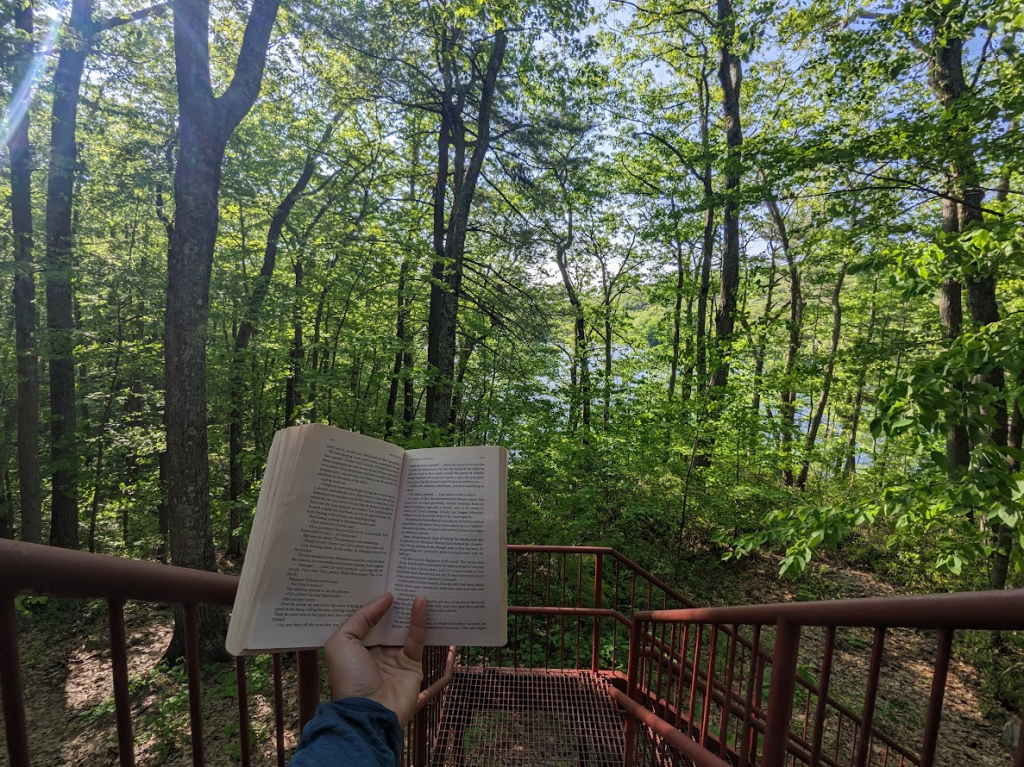
I carried up to four books with me at a time. Even I cannot justify that much extra weight, although I cannot imagine hiking without a book. A Kindle would probably be a good option, but there are so many books left in shelters, hiker boxes and “little libraries” that there are ample books along the way if not. I loved not knowing (and not choosing) the next book I would be reading, and I ended up reading lots of books I otherwise never would have, although I most certainly wouldn’t carry four again.
I carried a small synthetic towel and I’d say it’s indispensable. Drying off after swimming, wiping condensation down off your tent, and much more. I’ve since bought a smaller and lighter one from Mountain Warehouse for something like £3.
I originally set out with a SeaToSummit Aeros inflatable pillow. It was comfy but the valve broke after 100 miles. I then replaced it at a hostel called “Around the Bend”, which had their own branded pillow, which lasted me the rest of the trail. Whilst others use clothes bags/puffer jackets as pillows, I like having a proper pillow whilst on trail, and the inflatable ones are pretty light too.
I brought a pair of sunglasses with me that were blown off of my head on the freeway, whilst hitchhiking back from a Walmart resupply, sat in the back of a flat-bed truck going 70mph. I found a number of different pairs of sunglasses on my way along the trail (in hiker boxes etc.) and whilst by no means necessary, I liked having them throughout the summer months.

…
Trowels? Deuce of Spades
Great little trowel. Strong as anything, never bent or broke or snapped, and is in great condition now. Could dig holes through tough ground, was super light, and much smaller than a lot of other options. Worth the price in my opinion.
…
GPS? Garmin Fenix 7 Sapphire Solar
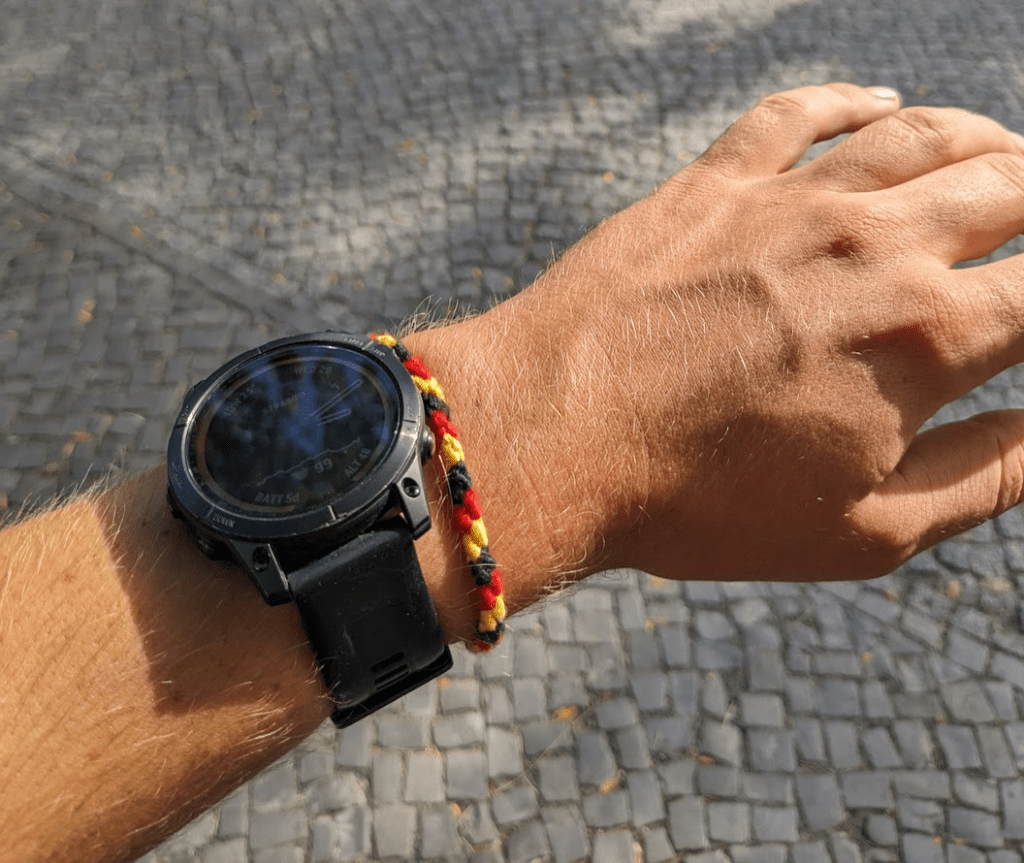
By no means necessary for thru-hiking the AT, but this is a truly phenomenal piece of kit. I put it in “Expedition Mode” the whole way, and used it to track my entire hike. It has solar-assisted charging (and about 20 days battery when in low power mode), an excellent GPS, is rugged (waterproofed to 100m, anti-scratch screen, and built to withstand extreme cold and heat), and boasts about a thousand other awesome fitness and health tracking features.
…
Miscellaneous? Osprey pack cover / Trash compactor pack liner
The Osprey pack cover served me well. It fits tightly around your pack, is fully waterproofed, and looks pretty cool too. The only issue I encountered was that rain could get in through the sides of it and then collect in the bottom. I think this would be true of any pack cover. Again, Osprey’s amazing warranty also applies to the cover.
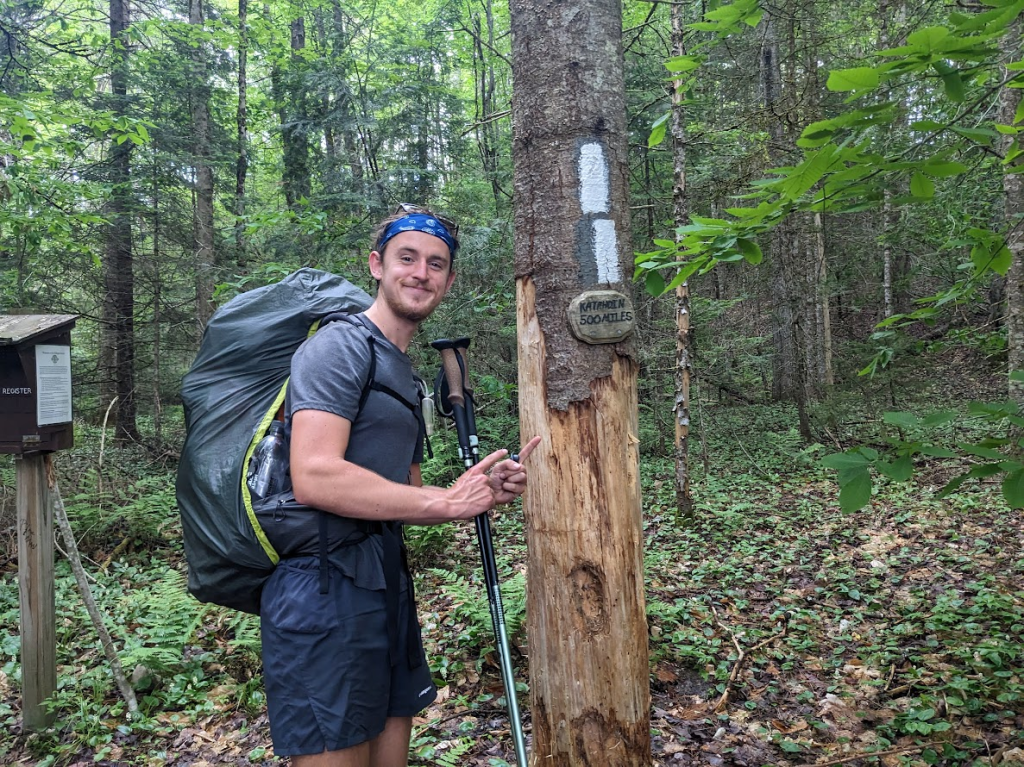
The whole way along I used a series of trash compactor bags (essentially just thicker bin liners) as a pack liner. This meant that even if the pack got wet, then everything inside would stay dry also. They’re essentially free and effective, so I’d say don’t bother buying a more expensive pack liner. The pack liner-pack cover-stuff sack combo is probably overkill, but it meant that my stuff literally never got wet.

 The Eye of an Archer
Leave a comment