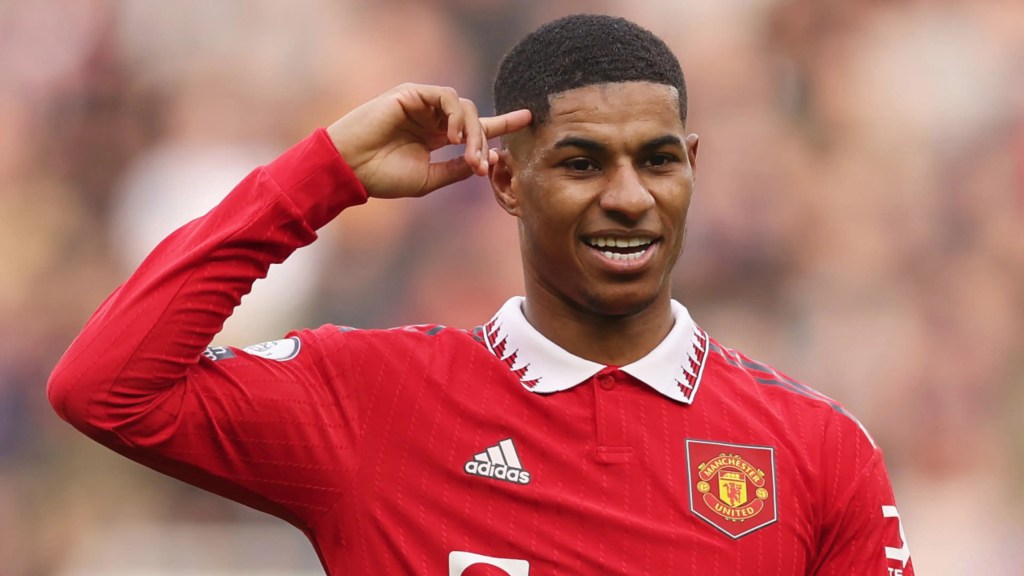
Edit: In recent weeks (26/11/2024), celebrity charity and activism has risen to the forefront of the news agenda. Captain Tom’s family’s misappropriation of funds still dominates headlines, whilst Ed Sheeran’s and Fuse ODG’s recent condemnation of Band Aid has thrown further gasoline on the fire that burns around the efficacy of celebrity involvement and charitable efficacy writ large. This article, originally written in December 2021 for a module called ‘The Politics of Inequality‘, and was structured as a position paper in response to the following statement:
‘Marcus Rashford’s collaboration with FareShare and his campaign to end child hunger in the UK exemplified how both celebrity activism and charity can play a key role in reducing without entrenching poverty and inequality.’
Context
As the UK entered its first lockdown in March 2020, the government announced they would not continue to provide free lunches for the 1.44 million children who relied on them (Gov UK, 2020). FareShare, the “UK’s national network of charitable food redistributors”, began an urgent appeal for donations of food and money that gained huge traction once Marcus Rashford, an England footballer, became involved (FareShare, 2022). Through his own donations and the donations of those he encouraged, FareShare raised £20 million and distributed 3 million meals to children by June of 2020 (Varley, 2020). Soon after, Rashford penned an open letter addressed to all MP’s, and posted it to his 12.5 million Instagram followers, in which he encouraged the government to continue providing meals throughout the summer for the children who required them (Rashford, 2020). The government subsequently made a U-Turn on their previous statements and agreed to extend the scheme. Through both charity and the platform created by his celebrity status, Rashford had a significant impact in ensuring that hundreds of thousands of children living in poverty did not have to go hungry.
Issue
However, despite Rashford successfully helping to alleviate the suffering of some of those living in poverty, some scholars allege that celebrity activism and charity entrench rather than reduce inequality and poverty. The criticisms of charity are most succinctly put by Livingstone, who suggests that by seeking to “patch up the victims” rather than attacking the root causes of poverty, charity “perpetuates the need for charity itself” by propping up the capitalist system and strengthening the state (Barnett and Weiss, 2008: 74; Livingstone, 2013: 350). Kapoor’s critique of celebrity advocacy is also centred on the part it plays in promoting the state and the capitalist system. He suggests that celebrities strengthen the state by collaborating with it in their humanitarian endeavours, they strengthen capitalism by profiting from their charity work, and that their charity and discourse creates damaging characterizations of those in poverty (Kapoor, 2012: 2-46). Kapoor’s critiques extend to all celebrity activism as he states we ought not recognise some celebrities as better than others, due to the existence of “‘humanitarian celebrities’ say[ing] something important about both global capitalism and […] liberal democracy” (Kapoor, 2012:3). In some instances, charity and celebrity advocacy form the only ways in which individuals in poverty can have some of their suffering alleviated so if Kapoor and Livingstone are both correct, then this poses a serious dilemma. Either we do not condone them and therefore allow people in poverty to suffer in the hope that it encourages the “decomposition of the present social quagmire”, or we do use them to alleviate immediate suffering and risk helping to maintain the system which brings about such suffering (Livingstone, 2013: 350).
Argument
This paper will not seek to contest Livingstone’s and Kapoor’s central claims that celebrity advocacy and charity often have counterproductive effects in removing inequalities. It will however illustrate charity and celebrity advocacy are not incapable of removing poverty and inequality, as demonstrated by Rashford. As Cooper suggests, there exists “deficiencies of conflating very different types of celebrities into one single image” and by avoiding this “simplicity trap” we can see that celebrity advocacy and their charity work can play a vital role in reducing inequalities and poverty (Cooper, 2008: 266, 265). This argument is predicated on the idea that “true dissidents […] play a vital role in our democracy” and that there exists extensive examples of celebrities, from John Lennon to Mark Twain, who have acted as “crusader[s] against the wrongs committed by those in power” (Easterly, 2010: 1). Not all celebrities are qualified to do so but some are, and their elevated social status can provide a platform for such challenges to the system. This paper will therefore argue that:
‘Marcus Rashford’s collaboration with FareShare and his campaign to end child hunger in the UK exemplified how both celebrity activism and charity can play a key role in reducing, without entrenching, poverty and inequality.’
In the first paragraph I will illustrate how he used charity as a tool to undermine the state whilst alleviating the suffering of those living in poverty. In the second and third paragraphs, I will outline how Rashford demonstrated celebrity advocacy can be used to change the discourse surrounding poverty and to challenge the capitalist system, respectively. In each paragraph I will demonstrate why such actions can play a positive role in removing poverty and inequality and illustrate how Rashford successfully did so whilst avoiding entrenching them further.
Evidence
Livingstone (2013: 348, 350) suggests that charity does not struggle “against capitalism in a transformative way”, and the state “succeeds if there is no longer a struggle [and] if charity is accepted as the best way to rid society of inequalities”. Using charity as a tool to undermine the government and incentivize it to do more is therefore essential, as it means the suffering of those in poverty can be alleviated without it being normalized that charity ought to solve issues of inequality and Rashford demonstrated how this can be done. The Conservatives have consistently framed their lack of action in alleviating poverty in the UK as the result of ‘tough but necessary’ economic choices and their halting of free meals for children living in poverty throughout the pandemic was justified in this way (Ryan, 2019). However, through his charity work and celebrity activism, Rashford demonstrated that with a relatively small amount of money, children who required school meals could be fed, thus undermining the government’s justification that they couldn’t afford to do so. By using his platform to publicise FareShare’s work and stating that the government ought to apply their “‘whatever it takes’ approach to the economy […] to protecting all vulnerable children across England”, Rashford played a key role in shifting public sentiment (Rashford, 2020). This resulted in huge calls for the government to be provide the meals instead of FareShare and Rashford and the success of this was reflected by the huge public pressure on the government to extend the school meal scheme over the summer, which culminated in the government making a ‘U-turn’ and extending the scheme (FareShare, 2021). Rashford therefore used charity as a tool to undermine the government and demonstrate that the state can and ought to do more, thus showing that the suffering of those in poverty can be relieved whilst also challenging the government, thereby negating Livingstone’s criticism.
Furthermore, it is well documented that ‘the poor’ have long been portrayed by the intelligentsia and the powerful as a dangerous mass lacking in basic human qualities (John Carey, 2012: 14). This has created damaging and untrue stereotypes of those living in poverty, which in turn has created a greater deference to issues of poverty and inequality. Celebrities have undoubtably played a part in this, with many of their humanitarian efforts entrenching ideas such as that the “global South is and remains in a subordinate position to the West” (Yrjölä, 2011:371, cited in Brockington, …:43). Kapoor suggests that celebrities dangerously shape this discourse in this way due to them lacking perspective of the issues at play because of their elite status (Kapoor, 2012: 24). However, Kapoor allows his views to fall into a “simplicity trap” by failing to recognise the positive role some celebrities, such as Rashford, can play in reshaping the discourse (Cooper, 2008: 265). Having been brought up in poverty by a single mum Rashford has direct experience with poverty, and his celebrity status ought to be seen as a platform from which he can change perceptions and give a voice to the marginalised (Rashford, 2020). He demonstrated how this can be done in his open letter in which he criticised people who “have placed blame on parents for having children they ‘can’t afford’” (Rashford, 2020). He first dismissed the damaging and incorrect belief that a parent’s love for their child equates to what they can materially provide, stating that he had “friends from middle-class background who have never experienced a small percentage of the love I have gotten from my mum” (Rashford, 2020). He then reminded the reader of the individuality of those in poverty and how mistaken common stereotypes of the worst-off are, by writing that his mother is a “a single parent who would sacrifice everything she had for our happiness” and that “THESE are the kinds of parents we are talking about [when we blame the parents, not the system]” (Rashford, 2020). Such characterisations can only serve to reduce rather than entrench inequality and poverty, therefore demonstrating the utility of celebrity activism.
Finally, change in reducing poverty will not come without open public discourse that criticises both the state and the capitalist system. However, as Kapoor highlights, in their efforts to reduce poverty and inequality, celebrities often inadvertently strengthen the state and the system. The first way they do this is by collaborating with governments, through which they give politicians “beneficia publicity” because of their association with them (Brockington, 2014: 118). Secondly, he suggests that because celebrity advocacy “is entangled with [capitalism] and unquestioningly promotes it”, that celebrity activism only serves to entrench the system (Kapoor, 2012: 32). However, Kapoor has again allowed his argument to fall into a “simplicity trap” by neglecting to acknowledge that some celebrities place themselves in opposition to the government and are critical of the system, despite benefiting financially (Cooper, 2008: 265). Whilst Rashford’s wealth and status undoubtably make him an elite, his occupation as a footballer makes him an ‘outsider’, not an ‘insider’. This was demonstrated by multiple Tory MP’s suggesting that “a millionaire footballer should not be giving lectures”, despite the government usually being keen to work with millionaires and celebrities, and by Hancock suggesting that footballers ought to take significant pay cuts to help fund the UK’s response to the pandemic, despite not asking this of a single other industry (de Menezes, 2020; Hyde, 2021; Balls, 2021). This meant that Rashford worked against the government and enabled him to openly critique the system. For example, in his open letter to the MPs, he stated that “the system was not built for families like mine to succeed, regardless of how hard my mum worked” which constitutes “a system failure” (Rashford, 2020). He then went on to say that without people being educated about poverty “we’re encouraging this cycle of hardship to continue” (Rashford, 2020). Whilst Rashford undoubtably personally profited from his campaign, so entrenched is capitalism within the neoliberal world order that we ought not reject any activism that may promote someone’s ‘brand’ as doing so would deny almost any individual from pushing for change. Such criticisms of the state and the system are rarely heard from people with such a platform, and they can play a key role in helping to change perceptions about the causes of poverty and inequality. This can in turn increase demands for change, thus demonstrating why we ought to encourage celebrity activism like Rashford’s.
Conclusion
It therefore must be concluded that both charity and celebrity activism can play a key role in reducing poverty and inequality within our society. Some celebrities, who have a complex understanding of the experiences of poverty and are willing to stand against the government, can utilise their platform to make real and positive change by acting as a dissident and demonstrating “the status quo [to be] morally wrong” (Easterly, 2010: 2). They can do so by helping to change the discourse surrounding discussions of poverty, by challenging and critiquing the government, and using their charity work to not only alleviate suffering and inadvertently act as “apologists” for the system but also to challenge and undermine the state (Kapoor, 2012: 33). Whilst celebrity advocacy and charity have repeatedly demonstrated themselves to be “problematic” when used incorrectly, they can also prove to be invaluable tools in the struggle against poverty and inequality when deployed well, as was exemplified by Rashford’s campaign against food poverty (Brockington, 2014: 162).
Bibliography
Balls, K., 2021. The Independent. [Online]
Available at: http://www.inews.co.uk/opinion/columnists/growing-tory-anger-education-policy-boris-johnson-832572
[Accessed 12 February 2022].
Barnett, M. N. & Weiss, T. G., 2008. Humanitarianism In Question. 1st ed. Cornell: Ithica.
Brockington, D., 2014. Celebrity Advocacy and International Development. Oxon: Routledge.
Carey, J., 2012. The Intellectuals and the Masses: Pride and Prejudice. London: Faber and Faber.
Cooper, A. F., 2008. Beyond One Image Fits All: Bono and the Complexity of Celebrity Diplomacy. Global Governance, 14(3), pp. 265-272.
Dietar, H. & Kumar, R., 2008. The Downside of Celebrity Diplomacy: The Neglected Complexity of Development. Global Governance, 14(3), pp. 259-264.
Easterly, W., 2010. Washington Post. [Online]
Available at: http://www.washingtonpost.com/wp-dyn/content/article/2010/12/09/AR2010120904262.html?hpid=opinionsbox1
[Accessed 17 February 2022].
FareShare, 2021. FareShare. [Online]
Available at: http://www.fareshare.org.uk/marcus-rashford/
[Accessed 3 February 2022].
FareShare, 2022. FareShare. [Online]
Available at: https://fareshare.org.uk/
[Accessed 4 February 2022].
Gov UK, 2020. Free school meals: Autumn term. [Online]
Available at: https://explore-education-statistics.service.gov.uk/find-statistics/free-school-meals-autumn-term/2020-21-autumn-term
[Accessed 10 February 2022].
Hyde, M., 2021. The Guardian. [Online]
Available at: http://www.theguardian.com/commentisfree/2021/jan/19/marcus-rashford-millionaire-tories-hate-u-turns
[Accessed 10 February 2022].
Kapoor, I., 2012. Celebrity Humanitarianism. New York: Routledge.
Livingstone, N., 2013. Capital’s charity. Capital and Class, 37(3), pp. 347-353.
McGoey, L., 2015. No Such Thing as a Free Gift. London: Verso Books.
Menezes, J. d., 2020. The Independent. [Online]
Available at: https://www.independent.co.uk/sport/football/premier-league/coronavirus-matt-hancock-premier-league-players-pay-cut-wages-health-secretary-nhs-workers-died-a9444041.html
[Accessed 15 February 2022].
Nownes, A. J., 2021. Can Celebrities Set the Agenda?. Political Research Quarterly, 74(1), pp. 117-130.
Rajagopal, A., 1999. Celebrity and the Politics of Charity. In: A. Kear & D. Steinburg, eds. Mourning Diana: nation, culture, and the performance of grief. London: Routledge, pp. 138-9.
Randall, D., 2008. Forbes. [Online]
Available at: http://www.forbes.com/2008/11/24/oprah-philanthropy-celebrity-biz-media-cz_dkr_
[Accessed 19 February 2022].
Rashford, M., 2020. Instagram. [Online]
Available at: Instagram. http://www.instagram.com/p/CBbuTx_nBK_/
[Accessed 6 February 2022].
Ryan, F., 2022. The Guardian. [Online]
Available at: https://www.theguardian.com/commentisfree/2019/may/16/tories-children-poverty-britain-austerity?CMP=gu_com
[Accessed 5 February 2022].
Varley, C., 2020. BBC Sport. [Online]
Available at: http://www.bbc.co.uk/sport/football/55338104
[Accessed 5 February 2022].

 The Eye of an Archer
Leave a comment